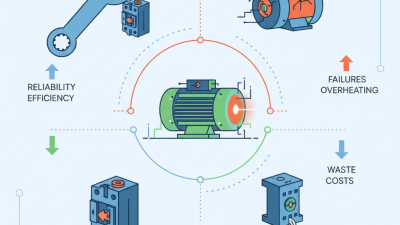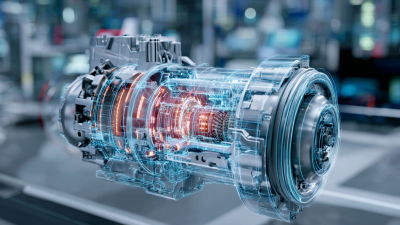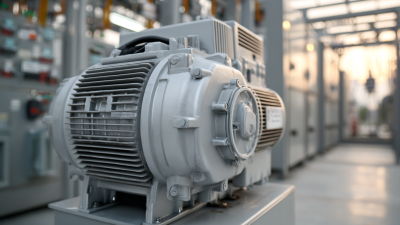
Choosing the best motor contactor brands for global buyers in 2026 requires more than comparing prices or catalog ratings. Electric motors remain major industrial power consumers, making reliable switching equipment important for energy control, uptime, and maintenance planning. The International Energy Agency has repeatedly highlighted the large electricity share associated with motor-driven systems. Market research from MarketsandMarkets and Grand View Research also indicates continued demand for industrial automation, motor control, and low-voltage electrical equipment. Their market estimates differ, however. That difference deserves attention.
This guide evaluates established brands such as Schneider Electric, Siemens, ABB, Eaton, Rockwell Automation, Mitsubishi Electric, Lovato Electric, and LS Electric. It considers contactor durability, IEC compliance, coil voltage options, overload relay compatibility, arc performance, global distribution, and after-sales support. IEC 60947-4-1 remains a key reference for low-voltage contactors and motor starters. Buyers should still verify regional certification requirements before placing orders. A familiar logo is not enough.
Field experience often reveals details missing from brochures. A contactor may perform well in a clean factory but struggle in a hot cabinet with frequent starts. Coil noise, terminal accessibility, replacement availability, and spare-part consistency can affect real operating costs. Some brands offer excellent technical depth but limited support in smaller markets. Others provide convenient distribution but less flexibility for unusual control voltages. No ranking is perfect. This comparison therefore focuses on practical evidence, published specifications, industry reputation, and buyer risk. The final choice should match the motor’s duty cycle, installation environment, control system, and long-term maintenance strategy.
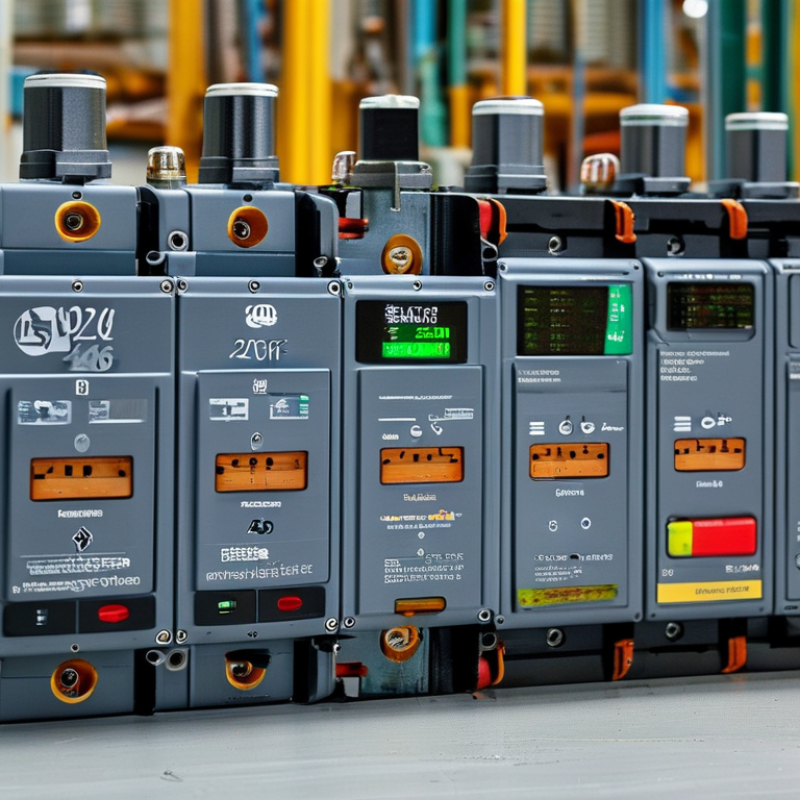
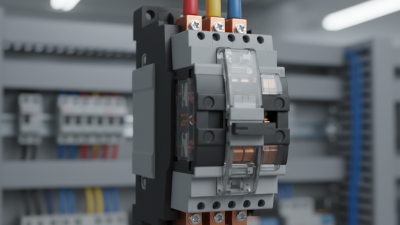
A motor contactor is an electrically controlled switch for starting and stopping motors. It usually contains a coil, magnetic core, main contacts, auxiliary contacts, and an arc-control system. When the control circuit energizes the coil, the magnetic field pulls the core downward. The main contacts close, sending three-phase power to the motor. When the coil loses power, springs open the contacts and interrupt current.
The operation is quick, but not careless. A contactor does not normally provide complete overload protection. An overload relay must detect sustained excessive current and open the control circuit. IEC 60947-4-1 defines key requirements for low-voltage contactors and motor starters, including utilization categories such as AC-3. For a 400-volt motor panel, buyers should check coil voltage, rated operational current, pole configuration, electrical endurance, and short-circuit coordination. Small details matter.
The IEA’s Energy Efficiency 2023 analysis indicates that motor systems consume roughly 40% of global electricity. The U.S. Department of Energy also identifies motor-driven equipment as a major industrial energy load. These figures explain why reliable switching matters beyond simple on-and-off control. Yet one assumption deserves review: a larger contactor is not automatically safer. Incorrect coil voltage, poor enclosure ventilation, or unsuitable AC-3 ratings can create heat and contact wear. Field testing should include repeated starts, voltage checks, and inspection of contact surfaces. Real installations are less perfect than catalog diagrams.
Global buyers should compare more than price and catalog ratings. Check the contactor’s operational current, motor duty category, coil voltage, and short-circuit coordination. A unit rated for laboratory conditions may struggle inside a hot, dusty control cabinet. Look for clear datasheets, traceable test reports, and compliance with relevant international standards. Reliability begins with evidence.
Field experience also matters. Ask how the contactor performs after repeated starts, voltage fluctuations, and long idle periods. Review electrical endurance data, mechanical endurance, terminal design, and spare-part availability. A secure screw connection, visible markings, and a replaceable coil can reduce maintenance time. Local technical support is valuable when a production line stops unexpectedly.
Tips: Compare complete operating costs, not only purchase prices. Include installation, auxiliary contacts, shipping, replacement stock, and energy use. Request samples for practical testing when the application is critical. Measure coil temperature after continuous operation and listen for unusual humming. Do not trust impressive marketing alone. I have seen apparently similar products behave differently under heat and frequent switching. One weakness remains: published figures may not reflect every real installation. Buyers should record test conditions carefully and challenge unclear claims before approving a large order.
For global industrial buyers, motor contactors are not interchangeable boxes. Their performance depends on motor size, duty cycle, voltage, and installation conditions. In plant commissioning, technicians often check coil voltage twice because a small mismatch can stop a production line. Buyers should review AC-3 ratings, short-circuit coordination, auxiliary contacts, and mechanical endurance. Clear technical documentation also matters when teams work across different languages and time zones.
Safety and reliability deserve more attention than attractive pricing. Look for products tested against recognized international standards and supported by traceable quality procedures. A dependable supplier should provide datasheets, test information, replacement guidance, and responsive engineering support. Confirm whether spare coils and auxiliary modules remain available for several years. Downtime is expensive.
Field experience still exposes weaknesses. Catalog ratings may not reflect dusty panels, high ambient temperatures, or frequent starts. Ask for application advice instead of trusting a single table. No shortlist is perfect. Buyers should compare lifecycle cost, delivery consistency, warranty terms, and local technical support. A slightly higher purchase price may reduce maintenance delays, but that assumption needs evidence from similar installations. Before approval, request sample units or verification data for critical applications.
| Evaluation Dimension | Recommended Global Benchmark | Why It Matters to Buyers | Typical Application | Buyer Verification Point |
|---|---|---|---|---|
| Primary Product Standard | IEC 60947-4-1 for low-voltage contactors and motor starters | Provides a recognized framework for electrical performance, switching duty, insulation, and safety testing. | Industrial control panels and motor-control assemblies | Request the applicable declaration of conformity and test documentation. |
| Utilization Category | AC-3 for normal squirrel-cage motor starting and stopping; AC-4 for plugging and inching | The correct duty category helps prevent accelerated contact wear and overheating. | Pumps, fans, compressors, conveyors, cranes, and machine tools | Match the contactor category with the motor’s actual switching cycle. |
| Motor Rating Range | Common IEC-60947 product ranges cover approximately 0.09 kW to hundreds of kW, depending on the frame and voltage | A broad range simplifies standardization across small machines and large industrial systems. | OEM equipment, process lines, and plant expansion projects | Check kW, horsepower, utilization category, and operating voltage together. |
| Operational Current | Select by rated operational current (Ie), not only by nominal motor power | Motor current varies with voltage, efficiency, power factor, and load conditions. | Three-phase induction motor control | Compare the nameplate current with the contactor’s AC-3 Ie rating. |
| Main Circuit Voltage | Typical industrial systems include 230 V, 400 V, 415 V, 480 V, and 690 V AC | Correct voltage selection supports reliable insulation coordination and switching performance. | European, Asian, Middle Eastern, and North American installations | Confirm the rated operational voltage (Ue) and system frequency. |
| Control Coil Voltage | Common options include 24 V AC/DC, 110–120 V AC, 220–240 V AC, and 380–415 V AC | Coil compatibility is essential for dependable PLC, relay, and control-panel integration. | Automation panels, HVAC systems, pumps, and production equipment | Verify coil voltage, AC/DC type, frequency, and allowable tolerance. |
| Auxiliary Contacts | At least one normally open and one normally closed auxiliary contact for general control circuits | Auxiliary contacts support interlocking, status feedback, alarms, and sequencing. | Forward-reverse starters and automatic control systems | Confirm the contact arrangement, current rating, and accessory availability. |
| Short-Circuit Coordination | Type 1 or Type 2 coordination selected according to the protection design | Coordination affects equipment damage, downtime, and post-fault restart requirements. | Industrial distribution boards and motor control centers | Review tested combinations with the upstream fuse or circuit breaker. |
| Overload Protection Integration | Compatible thermal or electronic overload relay with adjustable motor-current range | A contactor alone does not provide complete motor overload protection. | Direct-on-line motor starters | Select the overload setting from the motor nameplate current and application duty. |
| Environmental Protection | Use an enclosure with an appropriate IEC 60529 IP rating; IP54 or higher is common for dusty industrial areas | The enclosure, not the internal contactor alone, determines much of the installed environmental protection. | Outdoor panels, workshops, water treatment, and dusty plants | Evaluate dust, moisture, condensation, corrosion, altitude, and ambient temperature. |
| Mechanical Durability | Prioritize a documented mechanical endurance rating appropriate to the switching frequency | Frequent operation can make mechanical endurance more important than a low purchase price. | Packaging machinery, elevators, cranes, and cyclic production lines | Compare rated operations, switching frequency, and expected service interval. |
| Electrical Endurance | Evaluate the AC-3 or AC-4 electrical endurance under the intended load | Electrical wear depends on current, voltage, motor starting behavior, and switching duty. | High-cycle motor starting and reversing applications | Do not use mechanical endurance figures as a substitute for electrical endurance. |
| Global Compliance | Look for documentation relevant to the destination market, such as CE, UKCA, UL/CSA, or other required approvals | Regional compliance reduces customs, commissioning, and certification risks. | Export machinery and multinational plant projects | Check the exact product series, not only the supplier’s general certification claims. |
| Spare Parts and Accessories | Prefer modular auxiliary blocks, surge suppressors, overload relays, and replacement coils | Accessible accessories shorten repair time and reduce inventory complexity. | Maintenance-intensive factories and remote facilities | Confirm local availability, lead time, interchangeability, and lifecycle support. |
| Total Cost of Ownership | Assess purchase price, energy consumption, replacement frequency, downtime, and service support | The lowest initial price may not deliver the lowest lifetime operating cost. | Large-scale procurement and standardized industrial fleets | Use a multi-year cost model based on operating cycles and maintenance records. |
Note: Ratings and approvals vary by product configuration, installation method, destination market, and motor duty. Always verify the current manufacturer datasheet and applicable local electrical requirements before purchase.
Motor contactor selection should begin with the motor’s real operating conditions, not only its rated current. The U.S. Department of Energy reports that motor systems consume about 60% of electricity in American manufacturing. Small selection errors can therefore increase heat, downtime, and maintenance costs. For standard squirrel-cage motors, select a contactor rated for IEC utilization category AC-3. Check motor power, voltage, full-load current, starting frequency, and coil voltage. A 400-volt motor may still require different contactor sizing at 50 Hz and 60 Hz.
Heavy-duty applications need closer analysis. Cranes, compressors, elevators, and reversing drives may create frequent starts, plugging, or inching. AC-4 duty can be necessary because switching current during acceleration stresses the contacts. IEA analysis also finds that motor-driven systems consume more than 40% of global electricity. Efficient control matters. Verify short-circuit coordination, overload relay compatibility, ambient temperature, altitude, and enclosure conditions. For outdoor panels, dust and moisture deserve attention. I have learned that nameplate current alone is a weak decision rule. It ignores starting cycles and mechanical load. A contactor that works in a clean test room may fail beside a hot compressor. Review the duty cycle with the installer, and allow a practical margin without oversized, wasteful selection.
Global buyers should evaluate motor contactors through standards, not advertising language. IEC 60947-4-1 remains a key reference for low-voltage contactors and motor starters. Some projects also require UL, CSA, or regional conformity documentation. Check the exact model, test report, and production revision. A certificate alone does not prove every rating applies.
Safety depends on application details. Confirm coil voltage, utilization category, rated current, short-circuit coordination, and auxiliary contact capacity. In a dusty workshop, an enclosed panel may need better protection than a clean factory floor.
I have seen contactors selected by motor horsepower alone. That approach can miss frequent-starting conditions, ambient heat, and voltage fluctuation. Small details matter.
Supply reliability requires more than a low quotation. Ask about monthly capacity, batch traceability, packaging, and lead times during peak seasons. Keep approved samples for comparison.
After-sales support should include wiring guidance, failure analysis, replacement parts, and a clear response process. A practical supplier can explain why contacts weld or coils overheat, using test records rather than guesses.
Still, no supplier is perfect. Specifications may change, and technical replies can be incomplete. Buyers should recheck drawings before every major order.
One missing auxiliary contact can delay an entire control panel.