2026 Top VFD Motor Trends for Global Buyers to Watch?

As we approach 2026, the landscape for VFD motors is rapidly evolving. The global market is projected to grow at a CAGR of 6.5%, reaching approximately $28 billion by 2026. This expansion reflects an increasing demand for energy-efficient solutions in various industries, including manufacturing, oil and gas, and renewable energy.

VFD motors, or variable frequency drive motors, are integral to modern automation. They enhance operational efficiency, reduce energy consumption, and lower maintenance costs. Reports reveal that companies switching to VFD systems can see energy savings of up to 30%. Yet, while advancements are promising, challenges persist, such as initial costs and compatibility issues with existing systems.

Buyers must stay informed about the latest trends. Innovations in smart technology, IoT integration, and sustainability practices are reshaping the market. Understanding these changes can help buyers make informed decisions. However, the rapid pace of change also necessitates a careful evaluation of these trends. Being aware of these dynamics will be crucial for future success in this competitive field.

2026 Top VFD Motor Trends for Global Buyers to Watch?

Emerging Technologies in VFD Motors for 2026
2026 Top VFD Motor Trends for Global Buyers to Watch?

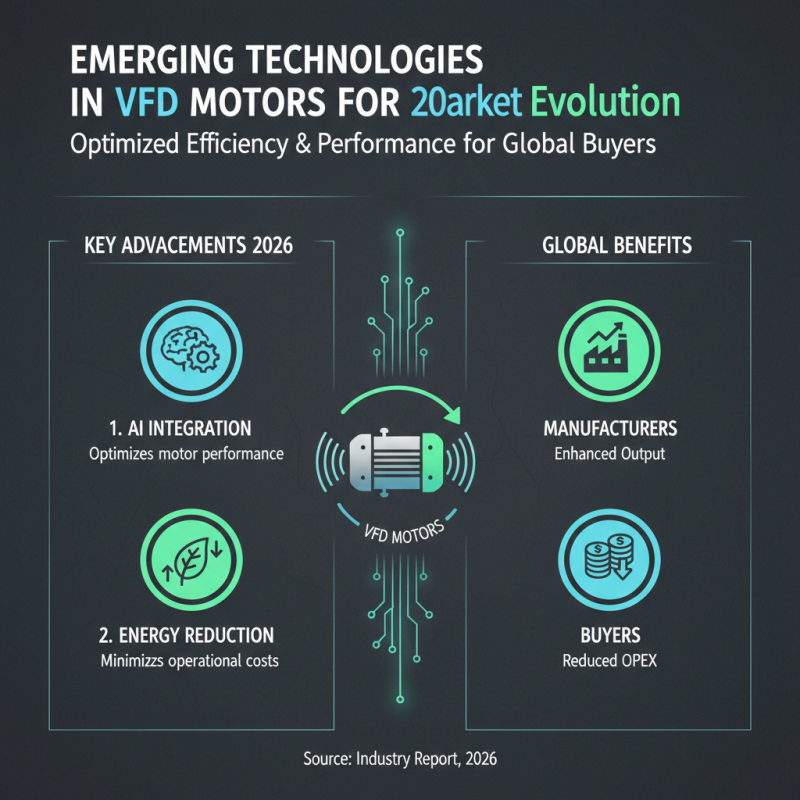
The market for Variable Frequency Drive (VFD) motors is evolving rapidly. Emerging technologies are enhancing their efficiency and performance. In 2026, we can expect to see significant advancements that global buyers should take note of. One key technology is the integration of Artificial Intelligence (AI). AI algorithms can optimize motor performance, reducing energy consumption. This not only benefits manufacturers but also helps in minimizing operational costs.

Another trend is the heightened focus on sustainability. Manufacturers are developing VFD motors that utilize eco-friendly materials. These innovations align with global efforts to reduce carbon footprints. Buyers are likely to prioritize these sustainable options. However, transitioning to greener technologies can pose challenges for some companies. Finding reliable suppliers and adapting to new systems may require a period of adjustment.

Wireless technology is also becoming more prevalent in VFD motors. This allows for real-time monitoring and diagnostics. While this is a promising development, it also raises questions about data security. Ensuring the integrity of systems against potential cyber threats is crucial. Buyers need to weigh the benefits against these risks as they navigate the dynamic landscape of VFD motor technologies.

Key Market Drivers Influencing VFD Motor Trends

The Variable Frequency Drive (VFD) motor market is influenced by several key drivers. According to a recent report from MarketsandMarkets, the VFD market is projected to grow at a CAGR of 7.6% from 2021 to 2026. This growth is largely due to rising energy costs and the demand for energy-efficient solutions across various industries. Manufacturers are increasingly seeking technologies that reduce energy consumption while enhancing operational performance.

Another significant driver is the push for automation in industrial sectors. The International Federation of Robotics predicts that global robot sales will continue to rise. As automation becomes more prevalent, the need for advanced motor control solutions, such as VFDs, becomes crucial. These systems enable precise control over motor speed and torque, ensuring optimal efficiency in production lines.

Also noteworthy is the increasing focus on sustainable practices. The transition towards greener technologies is reshaping market trends. Many companies are adopting VFDs to reduce carbon footprints. While the initial investment may seem daunting, the long-term savings and environmental benefits are substantial. Yet, the complexity of integrating VFDs into existing systems remains a challenge that requires careful consideration and planning.

Sustainability Practices in VFD Motor Manufacturing

The demand for Variable Frequency Drive (VFD) motors is growing, driven by sustainability initiatives. Manufacturers are increasingly focusing on eco-friendly practices. According to a recent industry report, 70% of motor production now incorporates sustainable materials. This shift is part of a broader move toward reducing the carbon footprint in the manufacturing process.

Energy efficiency is at the heart of sustainable VFD motor trends. Data shows that efficient VFDs can reduce energy consumption by up to 30%. This not only lowers operational costs but also contributes to environmental conservation. However, some manufacturers still struggle with waste management in production. Reports indicate that nearly 40% of facilities have not yet adopted recycling protocols.

Water usage is another critical aspect. Sustainable practices must address this issue to align with global standards. Many companies are still unaware of the extent of their water consumption during manufacturing. The push for better metrics and accountability in water use remains essential. The industry can improve, but ongoing challenges highlight the need for continued efforts in sustainability initiatives.

Consumer Preferences and Their Impact on VFD Motor Design

The evolving landscape of VFD (Variable Frequency Drive) motors is heavily influenced by consumer preferences. Buyers increasingly seek energy-efficient solutions that align with sustainability goals. This shift prompts designers to innovate, emphasizing eco-friendliness. For example, incorporating advanced materials can enhance energy savings. Creating compact designs also contributes to reduced environmental footprints.

Another notable trend is the demand for smart technology integration. Consumers expect VFD motors to connect seamlessly with IoT systems. These features enable real-time monitoring and performance optimization. However, integrating such technology presents challenges. Designers must grapple with complexities in usability and cost-effectiveness. Increased functionality should not compromise accessibility for smaller businesses.

Customization is also important for buyers. They want motors tailored to specific applications. This desire sparks creativity among engineers, leading to unique design solutions. However, this need for flexibility can complicate manufacturing processes. Balancing customization with efficiency remains a point of contention in the industry. Advances will require careful consideration of both consumer demands and practical constraints.

2026 Top VFD Motor Trends for Global Buyers to Watch

Trend Description Impact on Design Consumer Preference
Energy Efficiency Increased focus on minimizing energy consumption. Redesigning motors to optimize power usage. High demand for eco-friendly solutions.
IoT Integration Adoption of smart technologies for remote monitoring. Incorporation of sensors and connectivity features. Preference for smart solutions in industrial applications.
Compact Designs Demand for smaller, lighter motors without performance loss. Use of advanced materials for weight reduction. Preference for space-saving equipment in facilities.
Sustainability Growing emphasis on environmentally friendly production processes. Adoption of recyclable components and greener manufacturing. Increasing consumer preference for sustainable products.
Customization Rising trend for tailored motor solutions based on specific applications. Flexibility in design to meet specific consumer needs. Desire for products that match unique operational requirements.

Future Challenges and Opportunities in the VFD Motor Market

The future of the variable frequency drive (VFD) motor market is filled with both challenges and opportunities. One key challenge lies in the rapid evolution of technology. As industries push for energy efficiency, VFD motors must adapt continuously. This shift demands ongoing investment in research and development. Companies that fail to innovate may find themselves outpaced in a competitive landscape.

Another concern is regulatory compliance. As environmental laws tighten globally, manufacturers must ensure their products meet stricter guidelines. This can complicate production processes. Yet, it also opens doors for companies that proactively adopt sustainable practices. Embracing eco-friendly technologies can enhance brand reputation and attract environmentally conscious buyers.

Simultaneously, the growing demand for automation presents vast opportunities. Industries like manufacturing and logistics leverage VFD motors for enhanced efficiency. However, businesses need to consider the skills gap. As operations become more automated, competent talent is essential for successful implementation. Addressing these skill shortages will be vital for companies looking to thrive.

Select Electrical Logo
Since 1988

Select Electrical Ltd. © Copyright 1988-2025