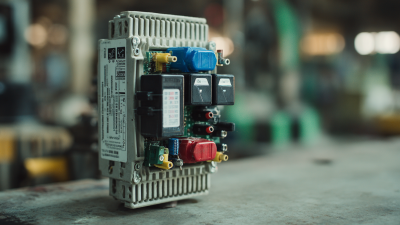
Top 10 Benefits of Using Motor Soft Starters in Industry?
In today's industrial landscape, the implementation of a motor soft starter can significantly enhance operational efficiency. According to Dr. Emily Carson, a leading expert in industrial automation, "Motor soft starters are vital for protecting and managing modern electric motors." This statement underscores the growing need for reliable technology in industries that heavily rely on motors.
Using a motor soft starter can offer multiple advantages. These devices reduce start-up current, which can prevent damage to motor components. Additionally, they provide a smoother acceleration process. Industries experience fewer mechanical wear and tear issues, making maintenance more predictable. However, organizations must choose the right model and settings. An unsuitable choice can lead to suboptimal performance and increased energy consumption.
Motors are at the heart of many operations. Proper management of these motors is crucial. Motor soft starters not only enhance safety but also improve the lifespan of equipment. However, the challenge remains in understanding their full capability. With the right knowledge and expertise, industries can fully leverage the benefits of motor soft starters.
Benefits of Reduced Electrical Stress on Motor Windings
Motor soft starters play a crucial role in reducing electrical stress on motor windings. By controlling the startup phase of electric motors, they limit the inrush current, which can be up to six times the motor's full-load current. According to industry data, this reduction in current can lower thermal and mechanical stresses on the motor, significantly prolonging its lifespan. In environments where motors are frequently started and stopped, soft starters can decrease failure rates by up to 50%, which is a substantial improvement in reliability.
Reduced electrical stress translates directly to cost savings. Research indicates that nearly 30% of maintenance costs for electrical systems are associated with motor failures. Soft starters minimize wear and tear, leading to longer intervals between maintenance activities. Additionally, by lowering the peak current during startup, they help in reducing voltage dips in the electrical supply, which can adversely affect other connected equipment, causing further operational issues.
While the benefits are clear, there remain challenges such as the initial setup and configuration of soft starters. Many facilities may not fully understand how to integrate these systems effectively. Implementing soft starters requires training and investment, which not every facility is ready for. Still, companies that adapt and learn to utilize these technologies can experience meaningful improvements in their operational efficiency and motor longevity.
Enhanced Starting Torque and Improved Operational Efficiency
Motor soft starters provide numerous benefits, particularly in enhancing starting torque and improving operational efficiency. They gradually ramp up the motor's speed, reducing mechanical stress during startup. This soft start feature minimizes the initial torque shock, protecting the equipment from damage. In industries with heavy machinery, this can significantly extend the lifespan of the motor and connected components.
Operational efficiency is markedly improved with soft starters. They allow for better control of the acceleration and deceleration of machines. This controlled approach reduces energy consumption during startup, which can lead to noticeable cost savings. Many operators find that this efficiency also translates to reduced wear and tear on the system, impacting maintenance schedules positively. However, some industries may face a learning curve when implementing these systems, leading to initial inefficiencies. Regular monitoring and adjustment are crucial to achieving the desired outcomes.
Adopting motor soft starters requires a thoughtful approach. Not all applications benefit equally from this technology; some machines may still experience issues at startup. Engineers should evaluate each case closely. Gathering data over time can reveal areas needing improvement. This analysis will help in optimizing the use of soft starters, ensuring that their advantages are fully realized in the production environment.
Minimized Mechanical Shock and Extended Equipment Lifespan
Using motor soft starters in industrial environments offers significant advantages, particularly in minimizing mechanical shock. The abrupt starting of motors can cause intense stress on equipment and surrounding structures. This stress can lead to premature wear and costly breakdowns. Soft starters effectively manage the starting phase of motors, gradually increasing power supply. This gentler approach lessens mechanical shocks, thus preserving equipment integrity.
Additionally, the use of soft starters plays a crucial role in extending the lifespan of machinery. Motors that start and stop suddenly tend to develop faults over time. These faults can manifest as vibrations or misalignments. A smoother start reduces these risks, decreasing the frequency of maintenance interventions. Over time, with less wear and tear, equipment operates more efficiently. This efficiency translates into reduced downtime and improved productivity.
However, it's essential to recognize that not all systems may see equal benefits from soft starters. Some applications may require thorough evaluation to ensure compatibility. Every installation should consider existing infrastructure and operational demands. Only then can the real advantages of soft starters be fully realized. A careful approach helps avoid common pitfalls.
Top 10 Benefits of Using Motor Soft Starters in Industry
| Benefit |
Description |
Impact on Equipment |
| Minimized Mechanical Shock |
Soft starters gradually ramp up the voltage and current, reducing sudden mechanical stress on motors and connected equipment. |
Reduced wear and tear leading to fewer maintenance costs. |
| Extended Equipment Lifespan |
Lower initial inrush current helps extend the overall lifespan of motors and mechanical components. |
Increased equipment reliability and reduced replacement frequency. |
| Energy Efficiency |
Soft starters optimize energy usage during motor startup, decreasing overall energy costs. |
Lower utility bills and improved sustainability. |
| Reduced Electrical Stress |
Soft starters reduce voltage peaks that can damage electrical components in the starting circuit. |
Less electrical damage and more consistent performance. |
| Smooth Acceleration |
Gradual acceleration minimizes mechanical shock and ensures smoother operation. |
Enhanced operational efficiency and less disruption. |
| Overload Protection |
Integrated overload protection ensures that motors do not operate beyond their capacity. |
Decreased risk of motor burnout and prolonged service life. |
| Reduced Noise Levels |
Soft starters can lead to a quieter operation when compared to direct-on-line starting methods. |
Improved working environment and compliance with noise regulations. |
| User-Friendly Controls |
Many soft starters come with intuitive controls and software for easier operation and diagnostics. |
Reduced training time for operators and less chance of user error. |
| Compact Design |
Soft starters are usually smaller than traditional starters, saving space in control panels. |
More efficient use of limited workspace. |
| Versatility in Applications |
Suitable for a wide array of applications, from pumps to fans and conveyors. |
Increased flexibility across different industrial processes. |
Energy Savings and Lower Operating Costs Through Soft Starting
Soft starters significantly enhance energy efficiency in industrial applications. By controlling the voltage and current during the startup phase, they reduce peak demand. This leads to lower energy bills over time. Moreover, fewer mechanical shocks occur, which prolongs the lifespan of motors and connected equipment. Many industries see up to 30% reduction in energy consumption with soft starters in place.
Lower operating costs are another key advantage. By minimizing electrical stress, soft starters help avoid costly repairs. Reduced wear and tear on motors mean less frequent maintenance. This can translate into significant savings. Industries need to consider the upfront investment in soft starters. It's essential to evaluate long-term benefits against initial costs. Some factories may struggle to see immediate ROI, prompting reflection on long-term efficiency goals. Transitioning to soft starters is a journey that requires careful planning and consideration of unique operational needs.
Improved Control and Flexibility in Industrial Applications
Motor soft starters enhance control and flexibility in various industrial applications. These devices regulate motor startup, minimizing mechanical stress and electricity spikes. According to a report by the International Electric Association, about 70% of all industrial energy consumption comes from electric motors. This highlights the importance of controlling their operation efficiency.
By gradually ramping up voltage, soft starters limit inrush current. This not only protects equipment but also enables smoother operation. A study found that industries using motor soft starters reported up to 50% reduced maintenance costs. The flexibility to adjust startup profiles can lead to significant energy savings. However, adopting these technologies requires careful consideration of specific operational needs.
Not every application may benefit equally from soft starters. Some systems may require distinct operational dynamics that soft starters do not provide. Moreover, additional training for staff might be necessary, adding to implementation costs. Balancing these challenges with the potential benefits is crucial for making informed decisions.