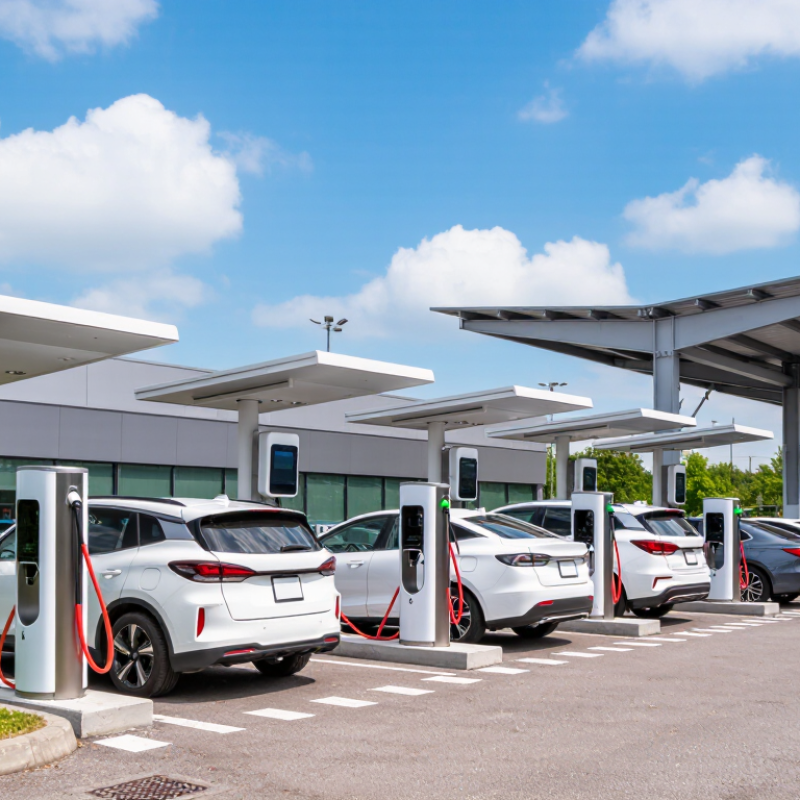
Top DC Chargers Which One Is Best for Global Buyers?

Choosing the right Dc Chargers is not simply a matter of comparing peak power. Global buyers must consider vehicle compatibility, charging standards, site capacity, climate, service access, and total operating costs. A unit that performs well in a controlled test may struggle at a busy roadside location or in extreme temperatures. Small details matter. Cable reach, screen visibility in bright sunlight, and clear fault reporting can shape everyday use.

This guide compares leading DC charger options through practical buying criteria, not headline specifications alone. It looks at power levels, connector configurations, safety features, network management, warranty support, and installation needs. Buyers should verify local grid conditions and applicable technical requirements with qualified professionals before ordering. Product availability and support can vary by market, even when a manufacturer sells internationally. That point is easy to overlook.

There is no universal winner for every project. A fleet depot may value predictable uptime and load management, while a retail site may prioritize broad vehicle compatibility and simple payment options. Budget also deserves careful attention: the lowest purchase price can hide higher installation or maintenance costs. Still, published specifications cannot predict every real-world outcome. Ask suppliers for references, service response details, and test data relevant to your location. Use this comparison as a starting point, then match the shortlist to actual site conditions. A little doubt is useful; it helps buyers ask better questions before committing.

Top DC Chargers Which One Is Best for Global Buyers?

How DC Fast Chargers Work and Where They Are Used

Top DC Chargers: Which One Is Best for Global Buyers?

DC fast chargers convert grid electricity into direct current before it reaches an electric vehicle’s battery. This bypasses the vehicle’s onboard AC converter. The charger and vehicle communicate continuously. They adjust voltage, current, temperature, and charging limits within seconds. A 150 kW unit can add meaningful range during a short coffee stop. Actual speed still depends on battery temperature, state of charge, and vehicle design.

The International Energy Agency’s Global EV Outlook 2024 reports more than four million public charging points worldwide in 2023. About 2.3 million public points were added during that year. This growth increases demand for reliable DC infrastructure, especially along highways, near shopping areas, and at fleet depots. High-power systems suit long-distance travel. Medium-power units can reduce installation costs in urban locations. Practical details matter.

Cable length matters.

Operators also need stable grid connections, weather protection, payment compatibility, and clear maintenance procedures. A charger may advertise impressive output, yet deliver less power during heat or peak demand. That gap is easy to overlook. Global buyers should compare measured performance, safety certifications, service coverage, and software interoperability rather than focusing only on peak kilowatts. Local electrical standards can also change installation time and total cost. The “best” charger is often the one that performs consistently at its intended site.

Top DC Chargers: Which One Is Best for Global Buyers?

DC fast chargers convert grid AC power into DC power inside the charging station and deliver it directly to the vehicle battery, reducing onboard conversion time. The best choice depends on location, vehicle type, grid capacity, traffic volume, and required charging speed.

The figures show representative rated power levels used in public and commercial deployments. Actual charging power may be limited by the vehicle, battery temperature, state of charge, connector, and site electrical capacity. Passenger-car chargers commonly range from 50 to 350 kW, while heavy-duty charging is moving toward megawatt-class systems.

Major Types of DC Chargers Available to Global Buyers

DC chargers serve different sites, vehicle fleets, and charging routines. Portable DC units suit temporary work areas or service vehicles, where a compact charger can support occasional charging.

Their output is generally lower than fixed equipment, so buyers should check charging time against battery size and daily use.

A short cable can also become awkward in a crowded depot.

Wall-mounted DC chargers can fit small parking facilities and workshops with limited floor space. They typically offer moderate power and straightforward installation, provided the wall and electrical supply can handle the load.

Floor-standing chargers are more common at public charging sites and fleet depots.

Their higher output can reduce vehicle downtime, but may require more site capacity and careful placement.

High-power systems may use liquid cooling to manage heat in cables and connectors during sustained charging. Split systems place power cabinets away from the charging dispensers, which can help busy sites manage space and expand capacity.

Modular designs allow operators to add power modules as demand grows.

Useful on paper.

Yet expansion depends on the original electrical design, so buyers should verify it before installation. Compare connector compatibility, rated output, ambient-temperature limits, maintenance access, and local grid capacity—not just the headline power figure.

Key Specifications for Comparing DC Charging Performance

Comparing DC chargers starts with more than the peak kilowatt figure on a product sheet. Check the voltage range, maximum current, and whether power is shared between connectors. A 240 kW unit may deliver less when two vehicles charge at once. Ask for power curves across battery states, not just a headline rating. Heat matters. So does the cable: a heavy, stiff lead can make a short stop feel awkward in winter.

Reliability and compatibility deserve equal weight. Review connector options, communication standards, uptime definitions, and remote fault reporting. The International Energy Agency’s Global EV Outlook 2024 reports that public fast-charger stock grew by 55% in 2023. That growth makes serviceability important: buyers should check spare-part access and technician response times for each market. The U.S. National Renewable Energy Laboratory’s research on extreme fast charging also highlights grid connection and thermal management as practical constraints. Ask suppliers for test results under sustained load, not only brief demonstrations. A specification can look excellent on paper. Real sites are messier. Compare efficiency at partial load, operating-temperature limits, and installation requirements, then verify the figures independently where possible.

Regional Standards, Connectors, and Installation Requirements

Choosing a DC charger for global buyers requires more than comparing charging speed. Regional standards decide whether the equipment can connect safely and legally. CCS1 is common in North America, while CCS2 serves Europe, Australia, and many other markets. GB/T remains widely used in China. CHAdeMO still appears in some existing Japanese and international installations. Connector compatibility should be checked against the vehicle fleet, not only the charger specification.

Electrical conditions also vary by region. A site may provide 400-volt three-phase power in one country and 480-volt service elsewhere. Engineers should verify transformer capacity, grounding, phase balance, and available peak power before ordering equipment. A fast charger can overload a weak connection. That happens more often than expected.

Installation needs local approval and practical planning. The design may require certified protection devices, surge protection, emergency isolation, weather-rated cabinets, and carefully sized cables. In hot or dusty areas, ventilation and thermal management become critical. In cold climates, cable flexibility and battery preconditioning deserve attention. A site survey should measure cable distance, parking flow, drainage, lighting, and cellular coverage. Poor placement creates daily frustration. Software settings may also need regional configuration for payment, language, data protection, and grid control.

Specifications are not always perfectly clear. Some suppliers list maximum output without explaining continuous performance or derating. Buyers should request test reports, local certificates, warranty conditions, and maintenance response times. I would also leave room for future connector changes, because today’s practical choice may become tomorrow’s limitation.

Top DC Chargers Which One Is Best for Global Buyers? - Regional Standards, Connectors, and Installation Requirements

A practical comparison of the main DC fast-charging requirements by market. Connector availability, electrical ratings, grid capacity, local codes, and vehicle compatibility should all be confirmed before procurement.

Market or Region Common Regulatory and Communication Standards Primary DC Connector Typical Public DC Power Range Typical Electrical Supply Key Installation Requirements Best Charger Configuration for Buyers
European Union and United Kingdom
  • IEC 61851 for conductive charging systems
  • IEC 62196 for charging couplers
  • CCS communication based on ISO 15118 and DIN 70121
  • Local low-voltage, metering, accessibility, and construction regulations
CCS Combo 2 for most public DC charging. A separate IEC Type 2 AC inlet is common on vehicles and charging equipment. Approximately 50–180 kW for mainstream public sites; 240–350 kW is used at selected high-power sites. Usually 400 V three-phase AC. High-power equipment may require a dedicated transformer, larger service connection, or medium-voltage supply. Dedicated circuit protection, protective earthing, residual-current protection with DC leakage detection, surge protection, load assessment, emergency isolation, suitable cable routing, and local authority approval. A modular CCS2 charger with 150–180 kW output is a balanced choice for mixed urban, retail, and highway applications. ISO 15118 readiness is useful for future smart-charging functions.
United States and Canada
  • SAE J1772 combined charging requirements for CCS1 systems
  • SAE J3400 for the North American Charging System interface
  • SAE J1772 communication principles for compatible systems
  • National and provincial electrical codes, including site-specific utility requirements
CCS Combo 1 and SAE J3400 are both relevant. The required connector depends on the vehicle population, fleet policy, and public-network compatibility. Approximately 50–180 kW for common installations; 250 kW and above is used where vehicles, grid capacity, and site economics support it. Commonly 480 V three-phase AC for commercial sites. Smaller installations may use other service arrangements subject to local code and equipment ratings. Electrical permit and inspection, listed equipment, overcurrent protection, grounding and bonding, ground-fault or leakage protection, bollards, accessibility clearances, cable management, signage, and utility load approval. A dual-standard configuration supporting the connector types required by the target fleet offers the broadest coverage. Select output power after confirming transformer capacity and utility demand charges.
China
  • GB/T 18487 for conductive charging systems
  • GB/T 20234.3 for DC charging connectors
  • GB/T 27930 for communication between off-board charger and vehicle
  • National and provincial electrical, fire-safety, and metering requirements
GB/T DC connector, which is not mechanically interchangeable with CCS or CHAdeMO. Approximately 30–180 kW for many public sites; higher ratings are available for fleet and highway applications. Generally 380 V three-phase AC for commercial and public charging installations. Utility capacity verification, distribution-cabinet protection, protective earthing, insulation monitoring, surge protection, fire-safety provisions, environmental protection, approved metering, and municipal filing where required. A GB/T-compliant modular charger with replaceable power modules is appropriate for domestic fleets and public networks. Export projects should not assume GB/T vehicle compatibility outside China.
Japan
  • CHAdeMO specifications for a large installed base of DC chargers
  • JIS and local electrical safety requirements
  • Vehicle and site communication requirements defined by the selected charging system
CHAdeMO remains important for many public installations. The connector strategy should follow the local vehicle mix and procurement specification. Approximately 25–90 kW is common for many existing and replacement sites; site-specific projects may use higher power. Commercial sites may use three-phase AC service, while smaller sites can have different supply arrangements depending on the equipment and utility connection. Seismic design review where applicable, weather protection, grounding, leakage protection, emergency stop, cable storage, snow or water management, site-access planning, and local utility approval. A durable CHAdeMO-focused charger is suitable where the installed vehicle base requires it. For new projects, confirm whether a multi-standard solution is justified by local demand.
South Korea
  • National electrical safety and charging-infrastructure requirements
  • Vehicle communication requirements applicable to the selected charging system
  • Local fire, construction, accessibility, and utility regulations
CCS Combo 1 is widely used for public DC charging. Some legacy vehicles and sites may require additional connector support. Approximately 50–180 kW for many public installations, with higher power available at selected highway sites. Typically 380 V three-phase AC for commercial charging stations. Electrical safety certification, grounding, insulation and leakage protection, surge protection, weather resistance, emergency isolation, fire-safety review, and sufficient parking-bay clearance. A CCS1 charger with a high-efficiency power module and strong thermal management is a practical choice for public and fleet applications.
India
  • National guidelines for electric-vehicle charging infrastructure
  • IEC-aligned requirements adopted through Indian standards where applicable
  • CCS2 is widely specified for public DC fast charging
  • State electricity-board, fire, building, and metering requirements
CCS Combo 2 for most new public DC fast-charging projects. Legacy low-power systems may use other national configurations. Approximately 30–180 kW, depending on vehicle demand, highway usage, and available grid capacity. Usually 415 V three-phase AC for commercial installations, subject to local distribution availability. Heat and dust protection, ventilation, earthing, residual-current protection, surge protection, lightning protection where required, fire-safety equipment, remote monitoring, and reliable backup or power-quality planning. A CCS2 charger rated around 60–120 kW is suitable for many urban and fleet sites. Higher power should be selected only after checking transformer capacity and operating temperature.
Australia and New Zealand
  • IEC 61851 and IEC 62196 principles
  • AS/NZS 3000 wiring rules and related electrical installation requirements
  • Local rules for metering, accessibility, construction, and network connection
CCS Combo 2 is the predominant public DC connector. CHAdeMO may be retained where legacy vehicle support is required. Approximately 50–180 kW for common sites; 300 kW-class equipment may be used on selected highway corridors. Commonly 400 V three-phase AC for commercial sites. Compliance with wiring rules, switchboard capacity, earthing, residual-current protection, surge protection, UV and weather resistance, accessibility, cable protection, and local distribution-network approval. A CCS2 charger with robust outdoor protection and flexible load management is generally the most future-ready option. Retain a second connector only when local demand supports it.
Middle East and Africa
  • IEC 61851 and IEC 62196 are commonly referenced
  • National electrical codes and utility connection rules vary significantly
  • Project specifications may require additional civil-defense or fire-safety approvals
CCS Combo 2 is common in many newer projects, while CCS Combo 1, CHAdeMO, or GB/T may be required for specific fleets. Approximately 60–180 kW for public sites; higher power is possible where grid infrastructure and vehicle demand permit. Often 400/415 V three-phase AC, but voltage, frequency, and service capacity must be verified for each country and site. High-ambient-temperature derating, dust and sand protection, solar exposure management, air-conditioning or liquid cooling where necessary, surge and lightning protection, earthing, fire-safety clearance, and utility approval. A CCS2 charger with wide operating-temperature capability, strong ingress protection, and active thermal management is a suitable default for many new projects.
Multi-Regional or Export Projects
  • IEC 61851 and IEC 62196 provide a common international reference
  • Connector and communication compliance must still be verified for each destination
  • Local certification, metering, cybersecurity, and radio-communications rules may apply
Use region-specific CCS2, CCS1, SAE J3400, GB/T, or CHAdeMO versions rather than relying on mechanical adapters as the primary solution. 60–180 kW is a versatile international range; 240–350 kW should be reserved for sites with suitable vehicles and grid capacity. A configurable 400–480 V three-phase input platform can simplify deployment, but the input voltage, frequency, protection, and certification must be adapted to each market. Confirm local electrical code, grid interconnection, environmental rating, electromagnetic compatibility, payment and communications rules, civil works, accessibility, and spare-parts support before shipment. The best global platform is a modular charger with replaceable power units, configurable output voltage, remote diagnostics, open network communication, regional connector options, and documented local certification.

Important: Power ranges and installation practices are typical market references rather than universal limits. Final equipment selection must be checked against the vehicle voltage, battery charging curve, local electrical code, utility service capacity, environmental conditions, accessibility rules, and the authority having jurisdiction.

How to Choose the Best DC Charger for Your Market

Choosing a DC charger for a new market requires more than comparing output power. A 60 kW unit may suit urban fleets, while remote sites need simpler 20 kW equipment. Check local grid capacity, voltage stability, and installation space before ordering. I have seen projects fail because a charger fit the vehicle but not the site. Measure the cable route. Confirm the parking angle. Small details affect daily use.

Connector compatibility should match the vehicles customers actually drive, not only future forecasts. Ask distributors for twelve-month sales data and inspect common charging ports. Charging speed also depends on battery temperature, software, and site power sharing. Do not trust a laboratory figure alone. Request test records under heat, rain, and low-voltage conditions. A field trial is worth more than a polished brochure. Sometimes, slower is safer.

Reliable suppliers provide clear certifications, safety documents, remote diagnostics, and accessible spare parts. Verify local service response times, training plans, and warranty exclusions in writing. Payment systems should support local currencies and practical network conditions. Consider dust filters in dry regions and corrosion protection near the coast. I would also test emergency stops and screen visibility at night. No selection is perfect. Leave room for maintenance, user feedback, and revised demand forecasts.

Select Electrical Logo
Since 1988

Select Electrical Ltd. © Copyright 1988-2025