
How to Choose the Right Functional Meter?

Choosing the right Functional Meter starts with the measurement, not the marketing label. A meter used on a factory motor needs different protection from one used on a laboratory bench. Voltage range, current capacity, accuracy, resolution, response time, and frequency limits should match the application.

The global test and measurement equipment market continues to expand, according to reports from Grand View Research and MarketsandMarkets. This growth reflects wider industrial automation, predictive maintenance, and connected monitoring. However, a larger feature list does not guarantee better results. NIST guidance repeatedly emphasizes traceability, calibration, and stated measurement uncertainty. Those details matter when a small reading error can trigger unnecessary maintenance or hide an emerging fault.

Lord Kelvin, a pioneer in measurement science, stated, “If you cannot measure it, you cannot improve it.” His principle remains practical for modern Functional Meter selection. Look for appropriate CAT ratings, verified safety certifications, durable probes, clear displays, and calibration support. IEC 61010 safety requirements and IEC 61557 testing principles can provide useful reference points for electrical applications.

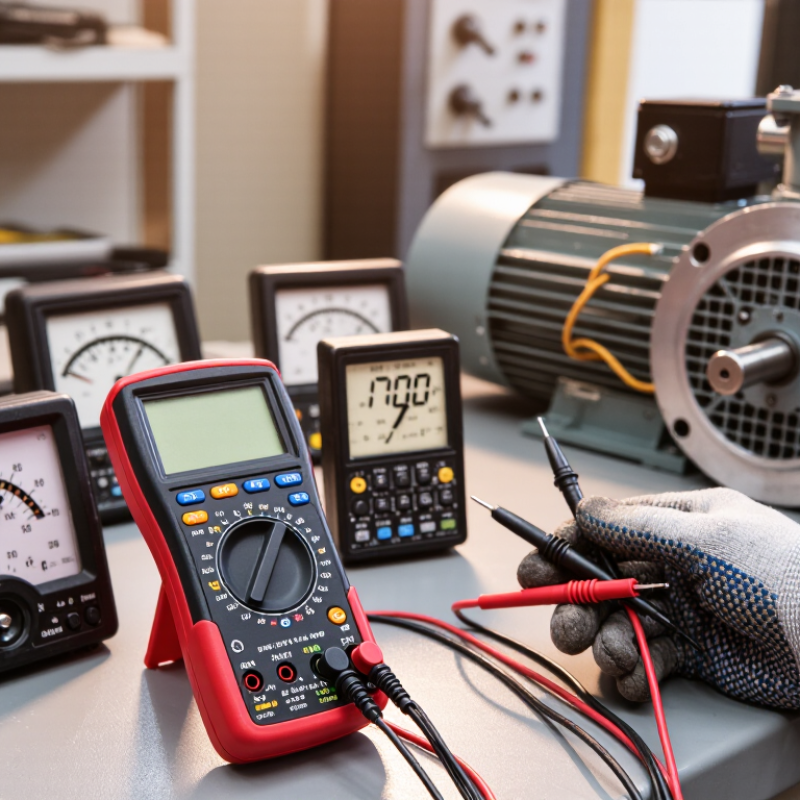
Real working conditions deserve attention. Will technicians wear gloves? Is the equipment exposed to dust, vibration, moisture, or bright sunlight? A compact meter may fit a toolbox but still fail in a harsh plant environment. That is an uncomfortable possibility.

No single Functional Meter suits every task. Battery life, data logging, wireless features, and software support may also influence long-term value. Buyers sometimes overestimate advanced connectivity and underestimate basic accuracy. That mistake is easy to make. A careful comparison should balance safety, performance, usability, serviceability, and total ownership cost.
How to Choose the Right Functional Meter?

Understanding What a Functional Meter Measures

How to Choose the Right Functional Meter?

Understanding What a Functional Meter Measures

A functional meter checks how an electrical system behaves under real conditions. It may measure voltage, current, resistance, frequency, capacitance, or continuity. These readings reveal whether a circuit works within its expected range. A voltage reading shows electrical pressure between two points. Current measurement shows how much charge flows through a circuit. Resistance indicates opposition to that flow.

Some meters also measure temperature, duty cycle, or diode performance. The available functions depend on the meter’s design. More functions do not always mean better results. A workshop technician may need capacitance and frequency readings. A maintenance worker might mainly check voltage, resistance, and continuity. Choosing features around actual tasks prevents confusing displays and unnecessary costs.

Measurement conditions matter greatly. A meter should match the system’s expected voltage and current levels. Its accuracy rating also affects confidence in small readings. For example, a slight resistance change may matter in a sensor circuit. Input impedance can influence sensitive electronic systems. I once treated a stable reading as proof of a healthy circuit. Further testing showed a loose connection was distorting the result. That mistake changed how I verify measurements.

Check the meter’s safety category and measurement limits before use. Use suitable leads, inspect their insulation, and follow professional procedures. A clear display helps, but dependable readings matter more. Calibration records provide stronger evidence than appearance alone. Small details count.

Identifying the Meter Features Your Application Requires

How to Choose the Right Functional Meter?

A functional meter should match the signal, environment, and decision behind each measurement. In a variable-frequency-drive cabinet, a basic average-reading meter may misread distorted waveforms. Choose true-RMS capability when harmonics or switching loads are present. For fast faults, check bandwidth, sampling rate, and response time. More digits do not automatically mean better accuracy.

The International Energy Agency’s Electricity 2024 report expects global electricity demand to grow by more than 4% annually through 2026. That growth increases the value of trend logging, alarm thresholds, and remote data export. A meter used near energized equipment also needs suitable measurement categories, input protection, and isolation. IEC 61010 guidance can help assess these safety requirements. Look beyond the headline accuracy. NIST Technical Note 1297 explains that measurement uncertainty includes repeatability, resolution, calibration, and environmental effects. Small details matter.

Think about the operator’s hands. Will gloves fit around the controls? Can the display be read in a dim plant room? Is the enclosure suitable for dust or moisture? For field work, a rugged case and long battery life may matter more than advanced software. I would also question every claimed specification. Accuracy can change with temperature, frequency, and range. A meter tested only on a clean laboratory signal may disappoint beside a motor. Choose features from real failure scenarios, not a crowded specification sheet.

How to Choose the Right Functional Meter?

Identifying the meter features your application requires starts with understanding the voltage levels you are likely to measure. The chart below shows representative nominal system voltages used in common applications.

Choose a meter with an appropriate AC/DC voltage range, measurement category rating, and safety margin for the highest voltage in your environment. For electronics, prioritize DC accuracy, resistance, capacitance, diode, and frequency functions. For building or industrial maintenance, AC voltage, current measurement, continuity, min/max capture, and suitable CAT protection are especially important. Automotive work commonly requires accurate low-voltage DC measurement, resistance, frequency, and temperature functions.

Comparing Accuracy, Measurement Range, and Response Speed

How to Choose the Right Functional Meter?

Accuracy, measurement range, and response speed determine whether a functional meter supports dependable decisions. Accuracy shows closeness to the true value, while resolution shows the smallest visible change. They are not the same. A meter displaying four decimal places may still produce misleading results. NIST Special Publication 811 explains that measurement results should include uncertainty, not only a numerical reading. Therefore, check accuracy as a percentage of reading plus counts, then review the stated test conditions.

Measurement range should match the real circuit, not an ideal estimate. For a 24-volt control system, a 60-volt range may provide useful headroom. For current measurements, select a range above the expected maximum and consider overload protection. IEC 61010-2-030:2017 addresses safety requirements for test and measuring circuits, including measurement categories. Response speed matters during unstable signals. A slow update can hide a brief voltage drop, while excessive speed may make readings difficult to interpret. The right balance depends on whether you inspect steady power, switching signals, or intermittent faults.

Tips: Record the meter’s accuracy, range, update rate, and uncertainty before purchase. Compare readings against a calibrated reference when possible. I have found that speed specifications can look impressive but remain vague. That deserves skepticism. Also, real-world temperature, probe quality, and operator technique may affect results more than expected. NIST’s measurement guidance supports documenting these influences rather than treating the display as absolute truth.

How to Choose the Right Functional Meter? - Comparing Accuracy, Measurement Range, and Response Speed
Meter Type Typical DC Voltage Accuracy Typical Measurement Range Frequency Measurement Typical Response Speed Resolution Best Suited For Main Trade-Off
Basic Handheld Digital Multimeter Approximately ±0.5% to ±1.0% of reading DC voltage: up to 600–1,000 V
DC current: up to 10 A
Resistance: up to 20–40 MΩ
Typically up to 10–100 kHz About 2–3 readings per second Usually 3½ to 4 digits General electrical maintenance, continuity checks, batteries, and household or light industrial work Limited accuracy and slower updates compared with professional or bench instruments
Professional Handheld Digital Multimeter Approximately ±0.05% to ±0.2% of reading DC voltage: up to 600–1,000 V
DC current: up to 10 A
Resistance: up to 40–60 MΩ
Typically up to 100–500 kHz About 3–5 readings per second Usually 4½ to 5½ digits Industrial troubleshooting, control cabinets, motor drives, and field service Higher cost and generally less display area than a bench meter
True-RMS Handheld Meter Approximately ±0.1% to ±0.5% of reading AC/DC voltage: up to 600–1,000 V
AC/DC current: up to 10 A
Resistance: up to 40 MΩ
Typically 10 Hz–50 kHz, depending on crest factor and waveform About 2–5 readings per second Usually 4½ to 5½ digits Variable-frequency drives, non-linear loads, switch-mode power supplies, and distorted AC waveforms True-RMS measurements can be slower and less accurate near the upper frequency limit
High-Precision Bench Multimeter Approximately ±0.002% to ±0.02% of reading DC voltage: typically 100 mV to 1,000 V
DC current: from µA to 10 A
Resistance: from mΩ to 100 MΩ or more
Typically up to 300 kHz–1 MHz for frequency functions About 5–50 readings per second, depending on resolution and filtering Usually 6½ to 8½ digits Laboratory measurement, calibration, production test, and precision electronics Excellent accuracy but lower portability; fast measurements may reduce displayed resolution
Graphing or Data-Logging Multimeter Approximately ±0.05% to ±0.2% of reading DC voltage: up to 600–1,000 V
Current: µA ranges to 10 A
Resistance: up to 40–60 MΩ
Typically up to 100 kHz–500 kHz Fast display updates; logging commonly from 1 sample per second to several samples per second Usually 4½ to 5½ digits Intermittent faults, battery discharge tests, thermal drift, and long-duration monitoring Recording speed, memory, and wireless functions may affect battery life and measurement duration
Process and Loop Calibrator Typically ±0.02% to ±0.1% of reading for current output or measurement Commonly 0–24 mA for current loops
Voltage functions often include 0–10 V
Some models support thermocouples or RTDs
Usually not intended for high-frequency measurements Typically 2–10 updates per second Often displays 4–6 digits or equivalent engineering units Industrial process loops, transmitters, valves, PLC inputs, and instrumentation commissioning Narrower electrical range than a general-purpose multimeter and limited suitability for waveform analysis
Insulation Resistance Tester Low-voltage accuracy is commonly around ±1% to ±3%; insulation readings vary by test range Test voltages commonly 50–1,000 V
Insulation resistance from tens of MΩ to tens of GΩ
Not designed for conventional frequency measurement Usually 1–3 seconds for a stable insulation result Often 3–5 digits, with automatic range selection Cable testing, motor windings, transformers, and electrical safety inspections Specialized high-voltage testing; not a replacement for a general multimeter

Specification ranges are representative industry values rather than data from any specific company or brand. Always verify accuracy, safety category, input protection, bandwidth, and response specifications for the exact instrument and measurement conditions.

Evaluating Compatibility, Durability, and Ease of Use

How to Choose the Right Functional Meter?

A functional meter should match the task, environment, and operator. Compatibility is more than checking measurement range. Confirm the meter supports the required voltage, current, frequency, or signal type. Also check connector styles and input limits. Fit matters.

In field testing, I compare the meter’s specifications with the equipment manual. A verified calibration certificate adds confidence, especially when readings affect maintenance decisions. Built-in protection, clear overload warnings, and recognized safety testing are also important. Do not rely on attractive features alone. They may not improve accuracy.

Durability depends on daily conditions. A workshop meter may face dust, oil, vibration, or accidental drops. Look for a strong housing, protected controls, and a display visible under harsh lighting. Sealed buttons can help, but sealing claims need evidence. Ask how the meter performed in realistic testing, not only in a laboratory.

Ease of use affects results. Large digits, simple controls, and a stable grip reduce mistakes during busy inspections. Automatic range selection saves time, though manual control can help experienced users investigate unstable signals. I once chose a compact meter that was easy to carry but difficult to read in bright sunlight. That was a poor trade-off. Test the screen, leads, and battery access before purchase. If possible, hold the meter with gloves. Small details matter.

Selecting the Best Meter for Your Budget and Operating Conditions

How to Choose the Right Functional Meter?

Selecting a meter starts with the operating environment, not the lowest price. A basic unit may suit dry indoor panels and occasional voltage checks. It may fail in dusty workshops, wet sites, or areas with strong electrical noise. The IEC 61010-1 safety standard emphasizes measurement-category ratings and insulation requirements. Check both before purchase.

Budget decisions should include accuracy, calibration, accessories, and downtime. NIST Technical Note 1297 explains that measurement results require uncertainty evaluation, not just displayed digits. A meter showing four decimals is not automatically more reliable. Look for documented accuracy, repeatability, and calibration intervals. The IEA’s Electricity 2024 report expects global electricity demand to grow by an average 3.4% annually through 2026. More connected equipment means more troubleshooting across variable loads.

Think about the workday. Will technicians wear gloves? Is the screen readable under bright sunlight? Can the meter survive a one-meter drop? These details often matter more than advanced functions. Field service experience suggests that poorly chosen leads and weak batteries create frequent delays. That is easy to overlook. I would also question whether every built-in function will be used; unused features increase cost and training time. Select the safest meter that matches the voltage, current, temperature, and environmental conditions you actually face.

Select Electrical Logo
Since 1988

Select Electrical Ltd. © Copyright 1988-2025