
What Is a TCP Perforating Gun and How Does It Work?

A Tcp Perforating Gun is a downhole tool conveyed on tubing to create controlled openings through casing and cement into a reservoir. TCP means tubing-conveyed perforating. The tubing positions the gun at the planned interval, while the completion system provides the means to initiate it. The shaped charges fire in a designed sequence. Their jets form tunnels that can connect the wellbore with the formation. In practical terms, the tool must be matched to the well, not selected by name alone.

An illustrative expert perspective, not a verified quotation from a real person, is offered here by fictional completion specialist Dr. Rowan Hale: “A perforating gun is only as effective as its placement, design, and fit with the well.” That distinction matters. Gun configuration, charge type, casing dimensions, cement condition, and operating environment can all affect results. Engineers review these factors and the completion plan before deployment. The details vary.

During a TCP operation, crews lower the assembly on tubing and position it across the target zone. Measurements and program checks help confirm placement and readiness. When initiated, the charges perforate the well’s casing and surrounding cement. The resulting openings may support flow between the formation and wellbore, depending on reservoir and completion conditions. A gun does not guarantee production. That part is easy to overlook. This introduction explains the tool’s components, operating sequence, selection considerations, and practical limitations, while distinguishing general principles from well-specific engineering decisions.
What Is a TCP Perforating Gun and How Does It Work?

What a Tubing-Conveyed Perforating Gun Is

A tubing-conveyed perforating gun is a downhole tool assembly connected to the tubing string, the pipe used to access a well. The tubing carries the gun to a selected interval, so the assembly can reach deeper or more demanding locations than some wireline setups. It is not simply a tube with charges attached. The system may include a carrier, shaped charges, firing components, and connections designed for well conditions.

Depth and placement matter. The gun must sit across the intended formation interval, where openings through the casing and cement can create paths into the reservoir. Operators use well records and surface measurements to verify its position. Firing is initiated through a controlled system from the surface, according to the approved well program. The exact method depends on the tool design and well configuration. Small differences in depth can matter.

Tubing conveyance can be useful when well geometry, pressure conditions, or completion plans make other conveyance methods less suitable. It also brings practical trade-offs: the tubing string adds weight, and rig-up takes careful coordination. That part is easy to underestimate. A perforating plan depends on verified equipment ratings, trained personnel, and site-specific procedures, not just the gun itself. Even experienced teams review assumptions; downhole conditions rarely match a drawing perfectly.

Key Components and Their Functions

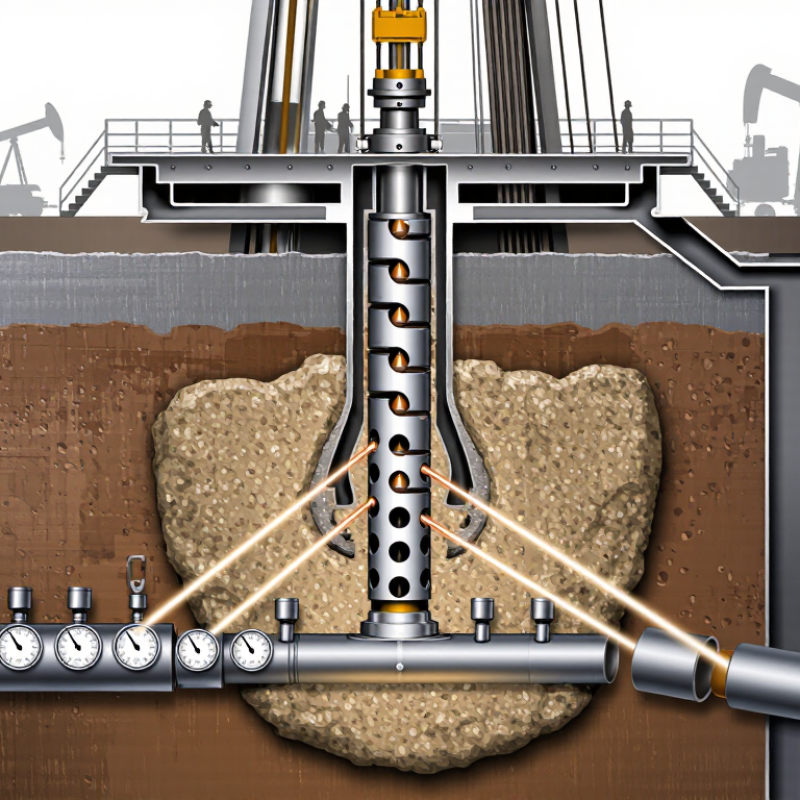
A tubing-conveyed perforating (TCP) gun is lowered into a well on production tubing or a work string. Its components must withstand downhole pressure, temperature, and fluid exposure. The gun carrier is a steel housing that holds and protects the shaped charges. It is not merely a container; its strength and dimensions affect how the assembly fits inside the well.

Each shaped charge directs energy toward the casing and surrounding cement, creating a passage into the formation. A detonating cord links the charges, while a firing head starts the sequence when triggered by a designed signal. Firing-head designs vary, so compatibility with the well’s conditions matters. Small seals and connections matter, too. A minor leak or poor fit can compromise reliability.

Centralizers or standoff features help keep the gun positioned as intended. Charge spacing and orientation determine the pattern of perforations, so they are selected for the well design rather than by guesswork. In practice, these parts work as one system. That is easy to underestimate. Engineers review ratings, assembly records, and well data before deployment, because actual downhole conditions may differ from expectations. Even a carefully planned setup deserves a second look.

What Is a TCP Perforating Gun and How Does It Work?

A tubing-conveyed perforating (TCP) gun is lowered into a well on tubing and positioned across the target interval. The firing system initiates the gun; a detonating cord transfers detonation to the shaped charges, whose jets create openings through the casing and cement into the formation. The tubing and gun assembly is then retrieved. Equipment and firing procedures vary by well design.

Chart note: Bars show the order of the steps only—not duration, scale, or performance.

How the Gun Is Prepared and Run into the Well

A TCP perforating gun is assembled at surface, then run on tubing or drillpipe to the planned interval. Preparation starts with checking the well program, gun tally, connection details, and depth reference. Each component is inspected against its approved specification. The crew verifies the firing system and pressure-control equipment under the operator’s procedures. Small mismatches matter. A tally error can place the perforations outside the intended zone.

API Recommended Practice 67 provides safety guidance for oilfield explosives, while API Recommended Practice 19B describes standardized perforating-system performance tests. Its reported results depend on test conditions, including target and casing configuration; they are not a promise of identical downhole performance. Before running in, the crew confirms the assembly, records serial and depth information, and completes required checks. The gun is then lowered at a controlled pace, with depth tracked against the well’s reference data. The paperwork can feel repetitive. It is not trivial.

At the target depth, the operator confirms position and well conditions before firing under the approved program. Afterward, the crew monitors the well and retrieves the string according to procedure. Temperature, pressure, fluid properties, and actual gun placement can affect results. Surface checks reduce uncertainty, but they cannot remove it completely. That deserves a second look.

What Is a TCP Perforating Gun and How Does It Work? — How the Gun Is Prepared and Run into the Well
Stage What Happens Typical Checks and Records
1. Purpose and system overview A tubing-conveyed perforating (TCP) gun is a perforating assembly run into the well on a work string or production tubing. Its shaped charges create tunnels through casing and cement into the formation when initiated by an approved firing system. Confirm the planned interval, completion design, conveyance method, firing method, and well-barrier requirements against the approved program.
2. Job planning The operating team reviews the well condition, pressure-control arrangement, conveyance limits, perforating objectives, and contingency plans before equipment is assembled. Document the approved procedure, equipment ratings, barrier status, communications plan, exclusion zone, and assigned responsibilities.
3. Equipment inspection Gun carriers, connections, seals, firing-system components, and associated tools are checked for condition and compatibility. The selected assembly is configured for the planned interval and well conditions. Verify component identification, inspection status, connection compatibility, and applicable pressure and temperature ratings. Record the assembly configuration.
4. Gun assembly and depth configuration Qualified personnel assemble the gun sections and configure the intended shot interval, orientation requirements, and connection to the conveyance string in accordance with controlled procedures. Check the planned gun length and shot layout against the completion schematic. Independently verify critical assembly details and maintain required handling controls.
5. Firing-system preparation The firing system is prepared and functionally checked only by authorized personnel, following the specific equipment instructions and the approved explosives-handling procedure. Confirm component status and the permitted arming sequence. Keep the system in its prescribed safe condition until the designated point in the approved procedure.
6. Rig-up and pressure-control checks The TCP assembly is connected to the work string or tubing. Pressure-control equipment is installed and tested as required for the planned operation and well conditions. Verify barrier arrangement, pressure-control equipment readiness, communication checks, and completion of required pressure tests before entering the well.
7. Run into the well The gun assembly is lowered on the conveyance string while the crew monitors depth, string movement, well conditions, and operating limits. Running speed and handling are controlled to protect the assembly and maintain well control. Record measured depth, tally, running progress, and relevant well observations. Pause and investigate unexpected drag, pressure changes, or other deviations according to the program.
8. Position and depth correlation The gun is positioned across the target interval. Depth is confirmed using the approved depth-measurement and correlation method, which may use well records and suitable logging or correlation data. Verify the target interval and reference depths with the responsible personnel. Confirm the final gun position before proceeding to the firing phase.
9. Firing and confirmation After required checks and authorization, the firing system is operated in accordance with the approved program. The charges perforate the casing and cement, providing flow paths between the wellbore and formation. Maintain the required exclusion zone and well-control safeguards. Record the firing sequence and available indications; do not rely on a single indication if the procedure requires additional confirmation.
10. Retrieval and post-job review The assembly is retrieved under the approved procedure. Returned equipment is handled safely, inspected, and reconciled before the well is prepared for the next completion or testing step. Document retrieval depth and condition, reconcile explosive components, report any anomalies, and update the well and job records.

Safety note: TCP operations involve explosives, pressure-control equipment, and well-integrity risks. The details shown are a general overview, not an operating procedure; qualified personnel must follow the approved well-specific program, applicable regulations, and equipment instructions.

How Firing Creates Perforations in the Casing

When a TCP perforating gun reaches the planned interval, it is positioned inside the well on the production tubing. Depth measurements help align its charges with the target zone. A firing signal activates the firing system, and selected charges detonate in sequence. The timing is brief. Each shaped charge forms a focused jet of metal that travels through the gun’s wall, well fluid, steel casing, and cement. It creates a narrow tunnel into the surrounding formation.

These openings let reservoir fluids enter the well, but their quality depends on more than the firing event. Charge placement, casing condition, cement quality, and formation properties all affect the result. The detonation also produces debris and pressure effects, so engineers assess the well design and operating conditions before deployment. After firing, well records and pressure behavior can help confirm whether the interval responded as expected. Not every perforation performs alike. That variability deserves attention: a clean-looking pressure response does not, by itself, prove that every tunnel is equally effective.

What Happens After the Gun Fires

Once the TCP gun fires, shaped charges pierce the casing, cement, and near-wellbore rock. Each shot leaves a narrow tunnel, while crushed grains and fragments can partly obstruct its entrance. The pressure difference across the new openings then drives fluid into or out of the formation. That first surge matters. It can move debris, but it does not guarantee clean tunnels.

API Recommended Practice 19B provides a useful laboratory reference: perforator test reports record penetration depth and entrance-hole diameter under specified test conditions. These measurements help compare systems, but they are not direct predictions of production from a real well. SPE technical literature on underbalanced perforating also highlights pressure drawdown and cleanup as important influences on flow. In practice, formation strength, fluid properties, and the pressure balance at firing all shape the result. A tunnel may look adequate on a test sheet and still perform poorly in the well. That gap deserves attention. Engineers review pressure records and post-shot well response, then adjust cleanup plans when evidence points to restricted flow. API RP 19B data are a reference, not a promise.

Select Electrical Logo
Since 1988

Select Electrical Ltd. © Copyright 1988-2025