7 Tips for Choosing Soft Starters for Electric Motors

Selecting the right soft starters for electric motors can protect equipment, reduce starting stress, and improve daily operations. Yet, choosing by price alone often creates expensive problems later. A 30 kW pump may start smoothly in a quiet plant, while the same starter struggles with a heavily loaded conveyor. The application matters more than the nameplate.

This guide explores seven practical considerations for making a reliable choice. Motor power, starting torque, duty cycle, enclosure rating, bypass design, and control compatibility all deserve careful attention. A technician should review the motor’s full-load current, expected starts per hour, and load behavior before comparing models. A starter that works well for a fan may be unsuitable for a crusher or compressor. Small details matter.

Real-world installation experience also shows that documentation can be overlooked. Check thermal capacity, fault protection, ventilation space, and commissioning procedures. Ask whether the manufacturer provides clear wiring diagrams and responsive technical support. Do not assume every “soft start” delivers the same performance. It does not. Testing under actual operating conditions is often wiser than trusting a specification sheet alone.

Some choices remain uncertain until the system runs. That is normal. Careful observation can reveal voltage dips, nuisance trips, or unexpected heat. By examining these seven selection tips critically, engineers, maintenance teams, and equipment buyers can reduce avoidable risks and choose soft starters for electric motors with greater confidence. Reliability begins before installation.

7 Tips for Choosing Soft Starters for Electric Motors

Identify the Motor’s Electrical and Mechanical Requirements

7 Tips for Choosing Soft Starters for Electric Motors

Identify the motor’s electrical and mechanical requirements before comparing soft starters. Record rated voltage, full-load current, frequency, service factor, and motor connection. Check the starting method, too. A pump may need a controlled voltage ramp, while a loaded conveyor may require higher initial torque. IEC 60947-4-2 defines performance requirements for semiconductor motor controllers, but field conditions still determine the correct rating. A catalogue match is not enough.

Measure the motor’s locked-rotor current and estimate the load’s inertia. The National Electrical Manufacturers Association recommends keeping voltage unbalance within 1%, because even small imbalance can increase current imbalance and heating. This matters during starting. The U.S. Department of Energy reports that motor-driven systems use roughly 70% of industrial electricity, so avoiding repeated failed starts has practical energy value. Count starts per hour, acceleration time, ambient temperature, enclosure conditions, and available fault current. These details affect thermal duty.

Think beyond the motor nameplate. A centrifugal pump can suffer water hammer if deceleration is too abrupt. A crusher may stall when material enters suddenly. In both cases, the starter must handle the machine, not only the motor. IEC 60034-1 provides motor rating and operating guidance, but it cannot predict every installation. I have seen selections based on horsepower alone; that shortcut looked efficient and proved expensive. Recheck cable length, bypass contactor capacity, overload settings, and mechanical braking needs with the installer. Some assumptions will be wrong. Better to test them early.

Match Soft Starter Ratings to Motor Size and Load Characteristics

A soft starter should match the motor’s full-load current, not only its kilowatt rating. The U.S. Department of Energy reports that motor-driven systems consume about 23% of U.S. electricity. Correct sizing therefore affects both starting reliability and operating efficiency. Check the motor nameplate current, supply voltage, starting frequency, and enclosure conditions before selecting a unit.

Load behavior matters just as much. A centrifugal pump usually needs modest starting torque, while a loaded conveyor may demand high torque for several seconds. Fans, crushers, and compressors can also create different acceleration profiles. Select a soft starter with a continuous current rating above the motor’s actual full-load current. Review its overload class and permitted starts per hour. A unit rated only for light-duty starts may overheat under repeated heavy acceleration.

Measure the real load when possible. It is better evidence than a catalog estimate. DOE motor-system guidance emphasizes evaluating the complete driven system, including load, controls, and operating conditions. IEC 60947-4-2 also provides requirements for semiconductor motor controllers and starters. Ambient temperature, cabinet ventilation, bypass operation, and cable length can reduce usable capacity. I have seen selections fail because the motor size looked correct, but the conveyor started fully loaded. That mistake is easy to repeat. Recheck acceleration time, locked-rotor current, and available short-circuit protection before approval.

Match Soft Starter Ratings to Motor Size and Load Characteristics

Typical three-phase motor full-load currents are compared with practical soft starter ratings selected with approximately 10–15% additional current capacity. Actual selection should also consider starting frequency, ambient temperature, acceleration time, and the load duty class.

Choose Control Features for Smooth Starting and Stopping

7 Tips for Choosing Soft Starters for Electric Motors

Choose Control Features for Smooth Starting and Stopping

Control features should match the load, not the motor nameplate alone. Adjustable initial voltage can reduce jolts from conveyors or pumps. Current limiting helps when the power supply is weak. For smoother stopping, choose a controlled ramp-down function. It can reduce water hammer in pipelines. The correct setting depends on pipe length and valve timing.

I have commissioned starters for fans, mixers, and loaded conveyors. The same ramp time rarely suits all three. A fan may accelerate gently in ten seconds, while a loaded conveyor needs torque earlier. Select separate starting and stopping parameters when available. Kick-start assistance can overcome static friction, but excessive use creates mechanical shock. Keep it brief. Thermal protection, phase-loss detection, and overload adjustment also matter. Set them using measured motor data, not guesswork.

Check how the starter communicates with the control panel. Fault relays, run-status outputs, and event logs can speed up troubleshooting. A bypass contactor may reduce heat during full-speed operation, but its interlocking needs careful verification. Test acceleration with the machine unloaded, then repeat under normal load. Watch current, vibration, and stopping distance. I once accepted a quiet start that hid belt slip. That was a useful mistake. Smooth sound does not always mean smooth operation. Confirm settings against the installation manual and applicable electrical requirements before commissioning.
Check Protection Functions, Installation Needs, and Compatibility

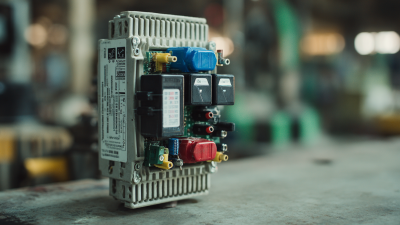
Choosing a soft starter requires more than matching motor power. Protection functions deserve close attention. Check overload, phase loss, under-voltage, over-voltage, stalled-rotor, and excessive-start protection. Confirm that each setting matches the motor nameplate current and starting duty. A warning screen helps only when someone reviews it.

Installation conditions can change performance. Measure the control cabinet space, airflow, and expected ambient temperature. Soft starters produce heat, especially during repeated starts. Leave room around ventilation openings. Check cable sizes, terminal access, grounding arrangements, and upstream protective devices. Do not assume the existing cabinet is suitable. I once underestimated heat buildup in a crowded enclosure. That mistake required extra ventilation and delayed commissioning.

Compatibility also includes the motor, load, controls, and operating schedule. Verify voltage, frequency, motor connection, and the required ramp-up time. A pump may need gradual acceleration, while a conveyor may require a stronger starting profile. Confirm compatibility with bypass contactors, emergency-stop circuits, and the control system’s input signals. Test the starter with the actual load, not only an unloaded motor. Watch current, vibration, sound, and stopping behavior. Small details matter. Record the final settings and label them inside the cabinet. Some applications still need adjustment after testing, and that is not a failure; it is useful evidence.

Compare Efficiency, Reliability, Cost, and Long-Term Maintenance

Tip 1: Match the soft starter to motor current, load inertia, and starting frequency. An undersized unit may overheat during repeated conveyor starts.

Tip 2: Check the bypass arrangement. A bypass contactor reduces thyristor losses after acceleration, improving running efficiency. The saving is modest, but continuous operation makes small losses visible.

The U.S. Department of Energy reports that motor-driven systems can consume more than 70% of industrial electricity. That figure makes correct sizing a financial decision, not just an installation detail.

Tip 3: Compare lifecycle cost, including controls, wiring, commissioning, and downtime.

Tip 4: Review the current-limiting profile. Pumps often need controlled acceleration, while crushers may demand higher starting torque. One setting rarely suits both.

Tip 5: Examine protection functions, such as phase loss, overload, and excessive starts. Reliability improves when the starter fits the actual duty cycle.

Tip 6: Ask about service access and spare-part availability. Dusty cabinets, warm rooms, and frequent starts expose weak maintenance plans quickly.

Tip 7: Record starting current, ramp time, and fault history after commissioning. Field measurements are more trustworthy than assumptions.

I have seen low purchase prices become expensive after repeated nuisance trips. That lesson is easy to ignore. The U.S. DOE motor-system assessment methodology also encourages measured operating data before efficiency decisions. Compare the starter with a variable-speed drive when speed control matters; a soft starter cannot reduce energy during normal running.

Select Electrical Logo
Since 1988

Select Electrical Ltd. © Copyright 1988-2025