
7 Tips for Choosing the Right DC Motor Drive?

Choosing the right Dc Motor Drive is rarely just a matter of matching voltage and horsepower. The drive must suit the motor, load, operating cycle, and working environment. A conveyor moving steady boxes needs different control from a hoist facing sudden torque changes. Small details matter. Measure the motor’s rated voltage, current, speed, and starting torque before comparing products. Then examine acceleration, braking, reversing, and speed regulation requirements. A drive that works smoothly in a test room may struggle beside heat, dust, or electrical noise.

The seven tips in this guide focus on practical selection decisions that engineers and maintenance teams often face. They cover motor compatibility, control methods, feedback options, protection functions, thermal performance, installation limits, and supplier support. Reliable datasheets should explain continuous and peak current ratings clearly. Application notes can reveal limitations that product advertisements overlook. Ask whether the Dc Motor Drive supports your feedback device, communication system, and required safety functions. Also check enclosure ratings, cooling space, and service access before purchase. Measure twice.

A common mistake is choosing by maximum power alone. Another is ignoring the load during starting. These oversights can cause overheating, unstable speed, nuisance trips, or shortened motor life. Real testing remains valuable. Record current, temperature, noise, and response during realistic operating cycles. No selection method is perfect. Still, careful comparison and documented testing can reduce risk, control costs, and produce a more dependable motor system.
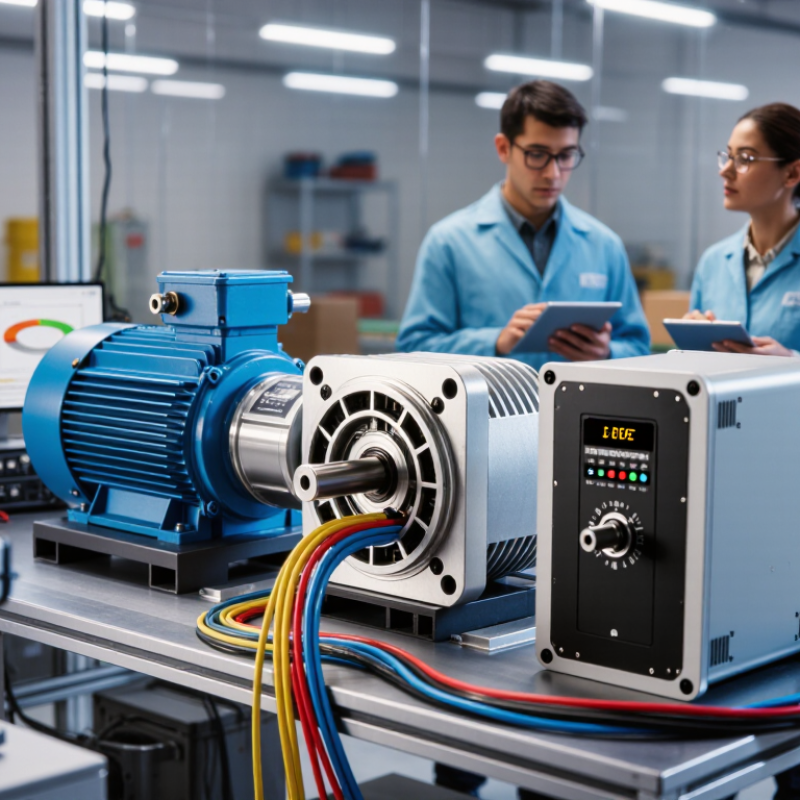
7 Tips for Choosing the Right DC Motor Drive?

Understanding DC Motor Drives and Their Main Functions

7 Tips for Choosing the Right DC Motor Drive

A DC motor drive does more than adjust speed. It converts incoming power, regulates armature voltage, controls torque, manages direction, and can provide braking. The International Energy Agency estimates that electric motor systems use about 53% of global electricity. Its energy-efficiency analysis also indicates potential savings of 20–30% through better motor systems. That makes drive selection a practical energy decision, not just a purchasing task.

Check these seven points: match rated voltage and current; confirm starting and continuous torque; select the required speed-control range; choose open-loop or feedback control; verify duty cycle and heat dissipation; review overload and fault protection; and inspect maintenance access. A drive rated for 10 amps may still fail when a conveyor starts fully loaded. Peak current matters. So does the enclosure near dust, moisture, or vibration. A commissioning engineer should measure actual load behavior, not trust a neat spreadsheet alone. Real machines are less polite.

The drive’s main functions should fit the application. A feedback system can hold speed when load changes, while a simpler controller may suit steady operation. Regenerative braking can return energy, but only when the system is designed for it. The U.S. Department of Energy’s motor-system guidance stresses proper sizing, controls, and heat management as key efficiency practices. One detail is often missed: low-speed operation may reduce cooling. Recheck thermal limits there. A perfect selection rarely survives the first hot summer. That is worth admitting before installation.

Matching the Drive to Motor Type, Voltage, and Current Requirements

7 Tips for Choosing the Right DC Motor Drive

Matching the drive to the motor type prevents unstable speed and wasted energy.

The International Energy Agency reports that electric motors consume about 45% of global electricity.

Tip 1: Confirm whether the motor is brushed DC, brushless DC, or another electronically commutated design.

Tip 2: Match the drive’s rated voltage to the motor’s nominal voltage. A 24-volt motor should not receive uncontrolled 48-volt operation.

Tip 3: Check continuous and peak current separately. Startup, acceleration, and sudden loads can demand much more current.

Tip 4: Review the motor’s feedback method. Encoders, Hall sensors, and sensorless control require different drive configurations.

Tip 5: Calculate heat carefully. The U.S. Department of Energy identifies motor systems as major industrial electricity users, so small efficiency losses can become expensive. Use the drive’s current rating at the actual enclosure temperature, not at ideal laboratory conditions.

Tip 6: Consider braking and regeneration. A descending load may return energy to the DC bus and raise its voltage dangerously.

Tip 7: Check protection features, including overcurrent, undervoltage, and thermal shutdown. Field experience shows that a drive can match voltage and still fail under repeated acceleration. Cable length, ventilation, and duty cycle matter.

I have found that neat calculations sometimes miss dirty connectors or poor airflow.

Recheck the assumptions. That step is easy to skip.

Evaluating Speed Control, Torque Response, and Operating Modes

Choosing a DC motor drive starts with the motion you need, not the motor label. Speed control should remain steady during load changes, especially on conveyors, pumps, and positioning equipment. Check the drive’s minimum and maximum speed range, feedback options, and response to sudden commands. An encoder can improve accuracy, but it also adds wiring, setup, and possible failure points.

Torque response deserves practical testing. A drive may reach rated torque briefly, yet struggle during startup or a jam. Observe acceleration with the real load, not only a laboratory flywheel. Set current limits carefully, then monitor motor temperature, supply voltage, and braking behavior. Test it cold. Test it warm. Small details matter. A drive that responds quickly can still create mechanical shock if acceleration and deceleration ramps are too aggressive.

Operating modes also influence reliability. Open-loop control may suit simple fans or low-cost conveyors. Closed-loop control is better when speed must remain stable under changing resistance. Regenerative braking, dynamic braking, and reversing modes require careful checks of resistor capacity and peak current. In field work, I have found that default settings are rarely perfect. One overlooked ramp value caused vibration during direction changes. That experience changed my selection process: compare measured response, protection functions, and service access, rather than trusting specifications alone. Leave adjustment room for wear, temperature, and imperfect installation.

7 Tips for Choosing the Right DC Motor Drive: Evaluating Speed Control, Torque Response, and Operating Modes
Tip Evaluation Dimension What to Check Practical Reference Data Best-Fit Applications Important Selection Note
1 Match the Motor Voltage Continuous and peak output voltage Compare the drive output range with the motor nameplate voltage and the available DC bus or battery voltage. Common motor ratings include 12 V, 24 V, 48 V, 90 V, 180 V, and 240 V DC. The drive should not exceed the motor’s rated voltage during normal operation. Battery-powered equipment, conveyors, pumps, fans, and industrial machinery Allow sufficient voltage margin for acceleration and back-EMF, while avoiding overvoltage that can overheat the motor insulation.
2 Verify Current and Torque Capacity Continuous current, overload current, and torque reserve Check the motor’s full-load current, starting current, load inertia, and required acceleration torque. A practical drive is often selected with at least 10–25% continuous-current margin. Short-term overload capability commonly ranges from 150% to 200% of rated current, depending on the drive design. High-inertia loads, elevators, hoists, indexing systems, and loaded conveyors Torque is approximately proportional to armature current in a separately excited or permanent-magnet DC motor, so current limiting directly affects available torque.
3 Evaluate Speed-Control Accuracy Speed range, regulation, and feedback method Determine whether the application needs open-loop control, tachometer feedback, or encoder feedback. Open-loop control may provide basic regulation, while closed-loop systems can commonly achieve approximately 0.1–1% speed regulation when correctly tuned and equipped with suitable feedback. Machine tools, web handling, printing equipment, and precision positioning A feedback device improves regulation under changing load, but wiring, signal compatibility, and tuning requirements must also be considered.
4 Assess Torque Response Acceleration response, current-loop performance, and transient behavior Review the drive’s current-loop response, acceleration and deceleration settings, current limit, and response to sudden load changes. For many industrial systems, acceleration and deceleration times are adjustable from fractions of a second to several minutes. The correct setting depends on load inertia, mechanical stress limits, and regenerative energy. Rapid indexing, cutting machines, robotics auxiliaries, and variable-load production lines Excessively aggressive tuning can cause current spikes, mechanical vibration, overshoot, or nuisance trips.
5 Choose the Required Operating Modes Unidirectional, bidirectional, four-quadrant, and regenerative operation Identify whether the motor must reverse direction, brake actively, hold torque, or return energy to the DC supply. A one-quadrant drive provides forward motoring. A two-quadrant drive supports forward motoring and braking. A four-quadrant drive supports forward/reverse motoring and forward/reverse regenerative braking. Hoists, test stands, unwind/rewind systems, servo-like motion, and reversing conveyors Regenerative braking requires a suitable DC bus, braking resistor, or energy-absorbing system; otherwise, bus voltage can rise during deceleration.
6 Check Duty Cycle and Thermal Requirements Continuous duty, intermittent duty, ambient temperature, and cooling Compare the required duty cycle with the drive’s thermal rating and consider enclosure ventilation, switching losses, and installation altitude. Continuous-duty applications require a drive rated for the full operating current. At ambient temperatures above approximately 40°C, many power electronics systems may require derating or additional cooling. 24-hour production lines, outdoor equipment, HVAC systems, and compact control cabinets A drive that meets peak current requirements but lacks continuous thermal capacity may experience overheating or reduced service life.
7 Review Protection and Interface Features Electrical protection, control signals, diagnostics, and integration Look for overcurrent, overvoltage, undervoltage, thermal, short-circuit, loss-of-feedback, and stall protection, plus compatible command inputs. Common control interfaces include 0–10 V analog, ±10 V analog, 4–20 mA, pulse/direction, relay, and digital network commands. Protection thresholds should be coordinated with the motor and system wiring. Automated production systems, process control, mobile machinery, and safety-monitored equipment Confirm signal isolation, fault reset behavior, emergency-stop integration, and compatibility with the controller before installation.

Checking Protection Features, Efficiency, Wiring, and Installation Needs

A DC motor drive should be selected around real operating conditions, not only rated voltage. The IEA estimates electric motor systems consume about 53% of global electricity, so small efficiency losses can become expensive.

Tip 1: Match the drive’s voltage and continuous current to the motor.

Tip 2: Check peak current for starting, braking, and sudden loads. A conveyor may appear gentle, yet its full belt can demand several times its running current.

Tip 3: Compare efficiency at partial load, where many machines operate most of the day.

Protection deserves equal attention. Tip 4: Look for adjustable overcurrent, short-circuit, thermal, stall, and undervoltage protection. IEC 61800-5-1 provides a useful safety reference for adjustable-speed drive systems.

However, a protection list can still mislead. Settings must match the motor, fuse, enclosure, and ambient temperature.

Tip 5: Confirm whether regenerative braking, reverse rotation, and emergency stopping require external components.

Wiring and installation often decide reliability.

Tip 6: Verify cable size, grounding, shielding, terminal spacing, and maximum cable length before ordering.

The U.S. Department of Energy reports that motor systems can account for more than half of industrial electricity use, making poor wiring an avoidable loss.

Tip 7: Check mounting space, ventilation, humidity, dust, and service access.

I have seen compact panels overheat because airflow was treated as an afterthought. The specification looked correct. The installation was not.

A site survey and a measured load profile remain more reliable than assumptions.

Comparing Control Interfaces, Reliability, Cost, and Long-Term Support

Choosing a DC motor drive requires more than matching voltage and current. Start with the control interface. Analog signals are simple and familiar, but electrical noise can distort speed commands. Digital inputs offer cleaner control and easier diagnostics. Networked interfaces can coordinate several drives, though setup demands better technical skills. Keep wiring practical. An oscilloscope often reveals problems that software screens miss.

Reliability depends on the working environment. Check overload capacity, thermal protection, isolation, and fault recording. A drive installed near dust, heat, or vibration needs stronger protection than one inside a clean cabinet. I once focused too heavily on peak current. That assumption was wrong. Continuous load, braking cycles, and cabinet temperature mattered more during daily operation.

Cost should include commissioning time, replacement parts, training, and energy use. A cheaper drive may become expensive after repeated faults. Ask how firmware updates are handled and whether service documentation remains available. Long-term support also means accessible technicians, clear repair procedures, and compatible spare units. Some suppliers promise support for years, but the details can remain vague. Request written terms. Test the support channel before purchase. A slow technical reply during selection can become a serious production delay later.

7 Tips for Choosing the Right DC Motor Drive

Compare control interfaces, reliability, cost, and long-term support before selecting a drive.

Typical practical cable-length planning values for industrial control signals. Actual limits depend on cable type, shielding, grounding, baud rate, electromagnetic interference, and installation conditions.

1. Match the motor

Verify rated voltage, current, speed range, overload capacity, and armature or field requirements.

2. Select the interface

Use analog signals for simple control, current loops for noise resistance, or digital networks for diagnostics and coordination.

3. Check feedback

Confirm compatibility with tachometers, encoders, current feedback, and required speed regulation accuracy.

4. Evaluate protection

Look for overcurrent, overtemperature, overspeed, field-loss, short-circuit, and regenerative braking protection.

5. Compare total cost

Include wiring, commissioning, braking components, cabinet cooling, software, maintenance, and replacement costs.

6. Assess reliability

Review duty cycle, ambient temperature, enclosure rating, cooling method, service access, and documented failure protection.

7. Plan long-term support

Confirm manuals, parameter backups, spare-part availability, firmware policy, training, and repair capability.

Select Electrical Logo
Since 1988

Select Electrical Ltd. © Copyright 1988-2025