
China Top 10 Automotive Vent Membrane Manufacturers
China’s automotive industry is expanding quickly, and reliable venting has become a quiet requirement behind that growth. Automotive Vent Membrane components protect lamps, batteries, motors, sensors, and electronic control units from water, dust, oil mist, and pressure changes. A membrane may look small. Its responsibility is not.
This introduction examines ten leading Chinese manufacturers in the Automotive Vent Membrane field. The selection considers membrane material, air permeability, waterproof performance, chemical resistance, production consistency, customization ability, and automotive quality systems. Some suppliers focus on e-mobility. Others serve lighting, drivetrain, and industrial electronics. Their capabilities are not identical, so a simple ranking may hide important differences.
Dr. Robert W. Gore, a pioneer in expanded PTFE technology, once said, “The best products are those that solve real problems simply.” That principle fits automotive venting well. A dependable membrane must equalize pressure without opening a path for contamination. It must continue working after vibration, temperature cycling, road splash, and long exposure to engine fluids.
The companies discussed here deserve practical evaluation, not automatic praise. Laboratory data can look impressive. Field performance may tell another story. Buyers should check test methods, batch traceability, adhesive compatibility, and validation evidence before selecting a supplier. This list is useful, but not flawless. Market positions change, and some manufacturers disclose limited technical information. A careful reader should compare specifications, request samples, and test the complete assembly under realistic conditions. That step often reveals more than a brochure.
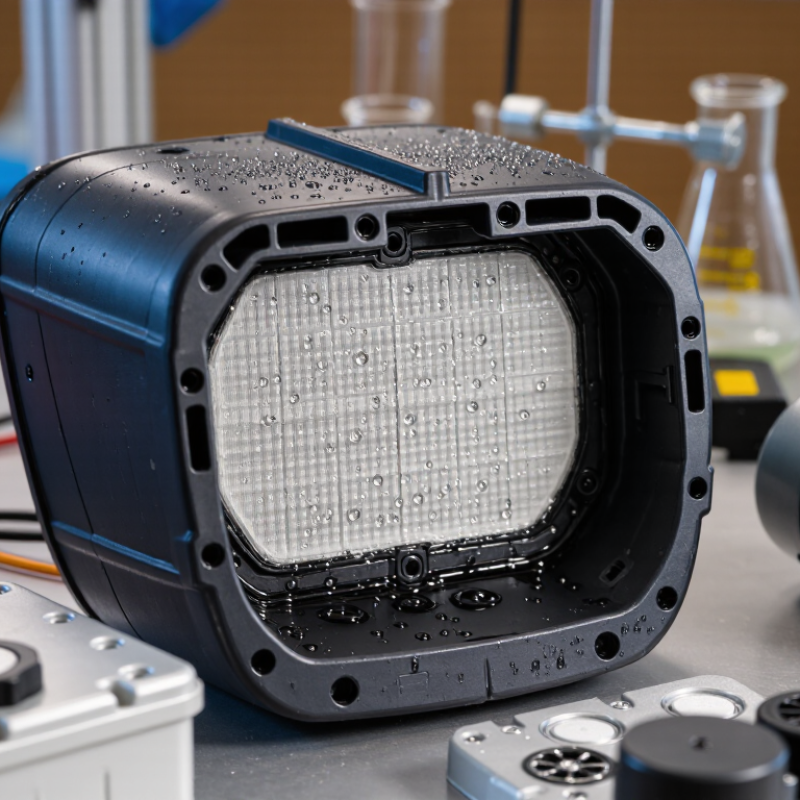
Table of Contents [Hide]
What Automotive Vent Membranes Are and Why They Matter
Automotive vent membranes are thin, breathable barriers fitted to sealed components. They allow air and pressure to move while blocking liquid water, dust, oil mist, and road contaminants. Common applications include lighting units, electronic control modules, motors, sensors, and battery enclosures. Many membranes use microporous materials with hydrophobic or oleophobic treatments. Their tiny pores support airflow without creating an open path for moisture.
Pressure changes happen constantly inside a vehicle. A parked car can face freezing nights and hot sunlight within hours. Internal air expands, contracts, and pushes against seals. Without controlled venting, housings may deform, gaskets may loosen, or moisture may enter during cooling. A suitable membrane reduces these risks and helps preserve component performance. In practical testing, engineers examine airflow, water resistance, dust protection, adhesion, and thermal cycling. Small details matter. Poor surface preparation can defeat an excellent membrane. So can uneven welding or excessive compression.
No membrane is perfect. Performance can decline after long exposure to fuel vapor, salt spray, vibration, or cleaning chemicals. This is where product evaluation needs honesty, not optimistic claims. Manufacturers should verify materials under realistic vehicle conditions and inspect batch consistency. A membrane that passes one laboratory test may still underperform in a narrow vent channel. Design teams should therefore match pore structure, size, adhesive system, and installation method to the component’s actual environment. Reliability begins with that careful fit.
China Top 10 Automotive Vent Membrane Manufacturers - What Automotive Vent Membranes Are and Why They Matter
Technical reference table for automotive pressure-equalization vent membranes
| No. | Technical Dimension | Typical Automotive Vent Membrane Data | Why It Matters | Common Evaluation Method or Reference |
|---|---|---|---|---|
| 1 | Primary Membrane Material | Expanded polytetrafluoroethylene (ePTFE) is widely used; other designs may use porous polyethylene or polyurethane films. | Material selection determines chemical resistance, thermal stability, water repellency, and long-term durability. | Material specification, chemical compatibility testing, and application-specific validation. |
| 2 | Pore Structure | Microporous structures commonly contain interconnected pores in the sub-micrometre to several-micrometre range, depending on construction. | The pore structure allows air and vapor movement while helping block liquid water and contaminants. | Bubble-point and pore-size distribution testing, commonly based on ASTM F316 principles. |
| 3 | Air Permeability | Specified according to membrane area, pressure differential, and test configuration; higher permeability generally supports faster pressure equalization. | Fast air exchange reduces pressure stress on seals, housings, lenses, sensors, and electronic components. | Air-flow testing at a defined pressure differential, often using ASTM D737-style equipment or an automotive-specific method. |
| 4 | Water and Liquid Resistance | Hydrophobic membranes are designed to resist rain, splash, condensation, and pressure-driven liquid intrusion; performance varies by construction and installation. | Liquid resistance helps prevent corrosion, electrical short circuits, optical fogging, and sensor malfunction. | Hydrostatic water-pressure testing, spray testing, immersion testing, and application-level ingress testing. |
| 5 | Oil and Chemical Resistance | Automotive Vents may require resistance to fuels, lubricants, cleaning agents, road salt, coolants, and plasticizer migration. | Chemical exposure can reduce hydrophobicity, weaken adhesive bonds, or change membrane permeability. | Fluid immersion, wipe, aging, and post-exposure air-flow and water-resistance measurements. |
| 6 | Operating Temperature | Many automotive vent designs are qualified across broad vehicle temperature cycles, commonly extending from sub-zero conditions to temperatures above 100 °C, depending on the component location. | Thermal cycling can affect membrane flexibility, adhesive performance, dimensional stability, and pressure equalization. | High-low temperature exposure, thermal cycling, and post-aging functional testing under the vehicle component specification. |
| 7 | Ingress Protection Target | The vent itself is selected to support the enclosure’s required dust and water protection level; the final rating depends on the complete assembly. | A membrane cannot compensate for poor housing design, damaged adhesive, contamination, or incorrect installation. | IEC 60529 and ISO 20653 are commonly referenced for enclosure and road-vehicle ingress protection. |
| 8 | Contamination Protection | Vents are engineered to limit the passage of dust, dirt, mud particles, fibers, and other environmental contaminants while maintaining gas flow. | Contamination control protects pressure sensors, cameras, radar modules, lighting systems, and battery enclosures. | Particle exposure, dust-chamber testing, visual inspection, and functional testing after environmental aging. |
| 9 | Attachment and Integration | Typical formats include adhesive-backed patches, molded-in vents, vent plugs, and assemblies integrated into plastic or metal housings. | Correct attachment maintains sealing, prevents edge leakage, and improves resistance to vibration and pressure pulses. | Peel or shear adhesion, burst-pressure testing, vibration testing, dimensional inspection, and assembly validation. |
| 10 | Typical Automotive Applications | Lighting housings, electric motors, transmission systems, battery packs, electronic control units, pressure sensors, cameras, radar modules, and charging components. | Each application has different requirements for airflow, temperature, chemical exposure, water resistance, and service life. | Component-level design verification and vehicle environmental validation based on the intended location and use conditions. |
Note: Values and descriptions represent common automotive engineering practices. Actual membrane performance depends on material grade, pore structure, adhesive system, vent geometry, housing design, and the applicable customer specification.