7 Tips for Choosing the Right Electric Motor VFD

Choosing the right electric motor vfd can determine whether a machine runs smoothly or struggles under daily loads. A mismatched drive may cause overheating, nuisance trips, noisy operation, or weak starting torque. These problems often appear after installation, when correction becomes expensive and disruptive.

This guide presents seven practical tips for selecting a suitable VFD. It considers motor voltage, rated current, horsepower, load type, speed range, enclosure protection, and control requirements. A conveyor carrying heavy materials needs different support from a lightly loaded fan. The nameplate matters, but it does not tell the whole story. Real operating conditions matter too.

Small details matter.

A reliable selection process begins with accurate measurements. Check the motor’s full-load amps, service factor, supply voltage, and expected duty cycle. Then compare those values with the manufacturer’s technical data, not only the product headline. Installers should also review braking needs, cable length, ambient temperature, and available panel space. One overlooked detail can reduce service life.

There is no universal VFD for every motor. Some recommendations may need adjustment after observing vibration, acceleration time, or changing production loads. That uncertainty deserves attention. When specifications remain unclear, consult a qualified engineer or the drive manufacturer. Their guidance can confirm compatibility and reduce avoidable commissioning errors. The following tips provide a practical starting point for making a safer, more efficient, and better-informed choice.
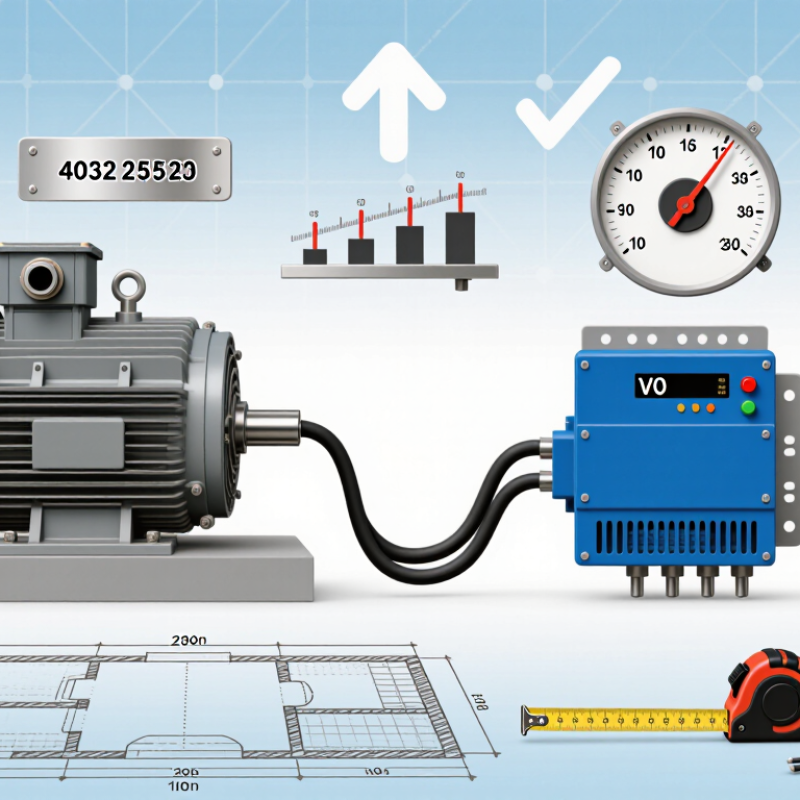
7 Tips for Choosing the Right Electric Motor VFD

Identify the Motor’s Voltage, Power, and Current Requirements

7 Tips for Choosing the Right Electric Motor VFD

Identify the motor’s voltage, power, and current before comparing any VFD. Read the motor nameplate carefully. Record rated voltage, phase, frequency, horsepower, kilowatts, and full-load current. A 230-volt motor cannot be treated like a 460-volt motor. Check the connection diagram too. Incorrect wiring can create immediate faults or poor torque.

Use the motor’s rated current as a primary sizing reference. Horsepower alone can mislead, especially with older motors or unusual loads. Select a VFD whose continuous output current meets or exceeds the motor’s full-load current. Allow extra capacity for high-inertia starts, frequent acceleration, or heavy conveyors. Confirm the VFD supports the motor’s voltage and phase. Input and output ratings are not always identical.

I once reviewed a pump installation that seemed correctly sized by kilowatts. The current rating was too low, and the drive overheated during startup. The original calculation missed the pump’s changing load. That mistake was avoidable. Measure operating current with a calibrated meter when possible, then compare it with the nameplate value. Also check ambient temperature, enclosure conditions, and cable length. These details affect performance. Do not guess. Leave room for real-world variation, but avoid excessive oversizing. An oversized drive may cost more and complicate protection settings. When the nameplate is damaged, pause the selection process and verify the motor data from service records or controlled testing.

Match the VFD to the Motor’s Load Profile and Speed Range

Tip 1: Map the motor’s real load profile before choosing a VFD. A pump may need steady torque, while a conveyor can demand high starting torque. Record running current, acceleration time, duty cycles, and speed changes. Nameplate horsepower alone is not enough. I once saw a correctly sized motor struggle because its brief overloads were ignored.

Tip 2: Match the VFD to the required speed range. Check the motor’s base frequency, minimum speed, maximum speed, and permitted overspeed. At low speed, a standard motor may lose cooling because its fan moves less air. External cooling or a different motor design may be necessary. Slow speed matters.

Tip 3: Select control performance for the application, not for impressive specifications. Basic control may suit a fan with a predictable load. Sensorless vector control can provide stronger starting torque for mixers, hoists, or loaded conveyors. Confirm overload capacity and acceleration settings from the technical documentation. Small details matter. Also check whether the VFD supports the motor’s insulation system and cable length. Long cables can increase electrical stress and create nuisance trips.

Leave operating margin, but avoid excessive oversizing. An oversized VFD can reduce measurement accuracy and complicate protection settings. Review the selection with an electrician or qualified engineer, especially when braking, frequent reversals, or hazardous machinery are involved. The best match comes from measured behavior, not assumptions.

Select Suitable Control Modes and Performance Features

Choosing the right electric motor VFD starts with matching the control mode to the load. Constant-torque equipment, such as conveyors and mixers, usually needs strong low-speed torque. Sensorless vector control can provide it without an encoder. Variable-torque loads, including fans and pumps, often work well with basic V/f control. It is simpler and may reduce setup errors. Closed-loop vector control offers tighter speed and torque regulation. It suits lifting equipment, winders, and applications requiring stable motion. Do not over-specify.

Review the motor nameplate before selecting performance features. Enter voltage, current, frequency, and rated speed accurately. A drive with suitable overload capacity handles short-term starting demands more reliably. Check acceleration and deceleration settings for heavy machinery. Excessively fast ramps may trigger faults or mechanical stress. Built-in PID control can maintain pressure, flow, or temperature automatically. For pump systems, sleep and wake functions can reduce unnecessary running. I have seen commissioning teams overlook these small features. That mistake costs time.

Consider braking methods, safe stop functions, communication options, and fault history. A braking resistor may help stop a high-inertia load without prolonged coast-down. Thermal protection should account for reduced motor cooling at low speed. Confirm the drive supports the required switching frequency and operating environment. Poor electromagnetic compatibility can disturb nearby sensors. Clear keypad menus and readable fault codes also matter during maintenance. Test the selected control mode with the real motor and load. Laboratory results may not reflect site conditions. Recheck the settings after the first week.

7 Tips for Choosing the Right Electric Motor VFD: Control Modes and Performance Features

Representative speed-regulation values show why control mode matters when selecting a VFD. Basic V/f control is suitable for general-purpose loads, sensorless vector control improves torque and speed accuracy, and closed-loop vector control provides the highest precision when an encoder is used. Actual performance depends on motor data, tuning, load conditions, and drive configuration.

Lower speed-regulation error indicates better speed-holding performance. Values are typical engineering ranges, not guaranteed limits.

Check Environmental Ratings, Harmonics, and Installation Conditions

7 Tips for Choosing the Right Electric Motor VFD

A suitable VFD must match the installation environment, not just the motor’s voltage and power. Check its enclosure rating for dust, water, oil mist, and accidental cleaning sprays. An outdoor cabinet may need additional protection from rain and sunlight. Temperature also matters. Heat reduces service life and can trigger unwanted shutdowns. Measure the actual panel temperature during operation. A catalog estimate may be too optimistic.

Harmonics deserve careful attention. VFDs can distort the electrical waveform and affect transformers, control equipment, or nearby motors. Review the facility’s power quality before selecting a solution. Line reactors, passive filters, or active filtering may reduce these effects. Do not assume every installation needs the same treatment. A small workshop and a large plant have different risks. Your first calculation may be wrong. Verify it with measurements when possible.

Installation conditions can quietly determine reliability. Leave enough clearance for airflow and maintenance access. Keep control wiring separated from motor cables. Use proper grounding and follow the drive manufacturer’s cable limits. Long cable runs may require additional output protection. Check altitude, vibration, humidity, and corrosive chemicals before ordering. Commission the drive under real load, then record current, temperature, and fault history. Small oversights often become expensive lessons.

Verify Compatibility, Protection Functions, and Long-Term Support

7 Tips for Choosing the Right Electric Motor VFD

Verify compatibility before comparing prices. Check the motor’s voltage, phase, rated current, frequency, and insulation class. The VFD must match the motor’s full-load current, not only its horsepower. Confirm the supply voltage and available fault current with a qualified technician. A mismatch can cause nuisance trips, overheating, or poor torque at low speed. Measure the cabinet space too. Small details matter.

Protection functions deserve careful testing. Look for adjustable overload protection, overvoltage, undervoltage, phase-loss, ground-fault, and overtemperature monitoring. Select an enclosure suited to dust, moisture, and ambient heat. In one commissioning job, a drive worked well on the bench but tripped inside a hot cabinet. We had underestimated ventilation. That mistake was avoidable. Consider braking needs, long motor cables, and electromagnetic interference before installation.

Long-term support can matter more than the initial purchase. Ask whether manuals, parameter files, spare cooling fans, and replacement parts will remain available. Confirm technical support hours and response procedures. A clear fault-history display also saves time during maintenance. Choose a supplier that provides practical training and firmware guidance. Do not trust vague promises. Request written service terms. I have seen teams select a cheaper drive, then struggle because nobody could explain its settings. Good documentation is not exciting, but it protects uptime. Recheck your assumptions with the installer and the maintenance team. They may notice a risk that a catalog cannot.

Select Electrical Logo
Since 1988

Select Electrical Ltd. © Copyright 1988-2025