Global procurement is changing how industrial teams evaluate a variable frequency drive. Price still matters, but it cannot stand alone. A low-cost unit may create higher expenses through energy losses, premature motor wear, difficult commissioning, or unavailable replacement parts. Experienced buyers examine the complete operating picture before approving a supplier.
Dr. Ned Mohan, a respected power-electronics educator and author, has said, “Power electronics is the technology of controlling and converting electrical energy.” His observation explains the practical value of a variable frequency drive. It does more than adjust motor speed. It manages torque, starting current, process stability, and energy use across different operating conditions. Yet performance depends on correct sizing, installation, and application data.
Global sourcing adds another layer of responsibility. Procurement teams should verify voltage ranges, frequency compatibility, enclosure ratings, communication protocols, harmonic performance, and regional certifications. They should also inspect factory testing records and technical support arrangements. Small details matter. A missing manual can delay commissioning. A slow spare-parts channel can stop production.
Reliable suppliers provide traceable documentation, consistent firmware control, and clear warranty terms. They also understand local service expectations. However, no procurement model is perfect. Forecasts can be wrong, and standardized products may not suit every plant. That weakness deserves attention. The strongest strategy combines technical review, supplier audits, lifecycle-cost analysis, and realistic field feedback. Choosing globally should not mean choosing blindly. It should mean comparing evidence, risks, and long-term operating value before the purchase order is released.
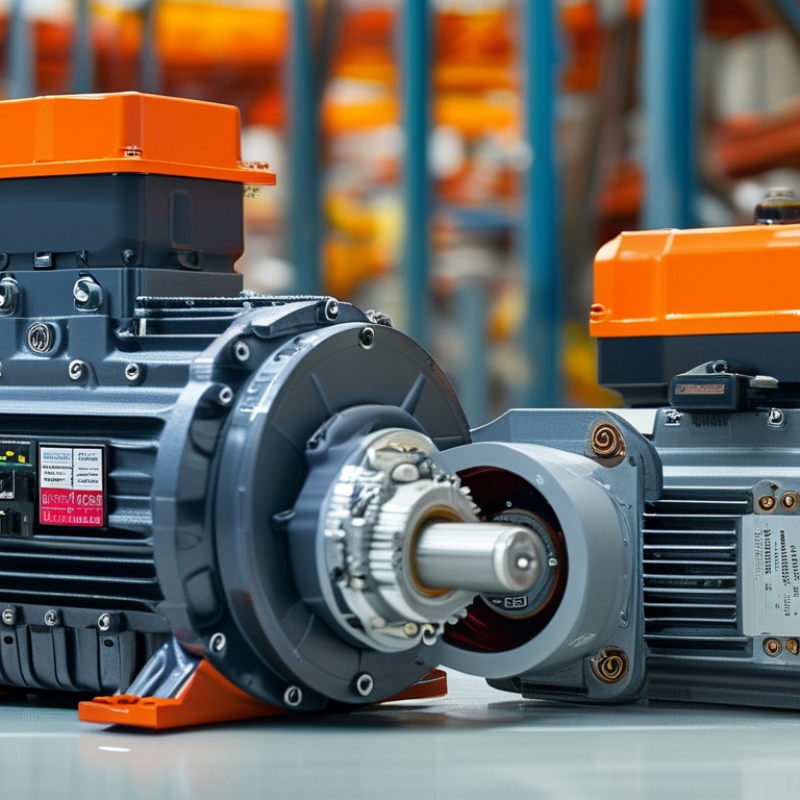
A variable frequency drive, or VFD, controls an AC motor’s speed by changing its frequency and voltage. It converts incoming power, manages motor output, and adjusts operation to real-time demand. A pump may run slowly at night instead of wasting energy through throttling. A conveyor can also start smoothly, reducing mechanical shock.
This matters in global procurement because motor-driven systems consume about 53% of worldwide electricity, according to the International Energy Agency’s Energy Efficiency Market Report. The U.S. Department of Energy reports that motors use nearly 70% of industrial electricity. For variable-torque equipment, such as fans and pumps, lower speed can create major savings. However, results depend on load profiles, installation quality, and maintenance. A VFD is not a magic box. That distinction is easy to miss.
Tips: Request efficiency data at several operating points, not only the rated condition. Check input voltage, frequency range, enclosure rating, harmonic performance, and communication compatibility. IEC 61800 standards can support clearer technical comparisons across suppliers. Ask for test records and lifecycle data. The cheapest unit may create higher engineering costs later. Procurement teams should also assess local service capacity, spare-part access, and training needs. I would still challenge every projected saving; real factories rarely follow perfect laboratory curves.
A variable frequency drive supports global procurement by standardizing motor control across different facilities. It adjusts motor speed and torque according to actual production needs. This can reduce energy waste, mechanical stress, and replacement frequency.
For international purchasing, compatibility must be checked before price comparison. Confirm input voltage, frequency, motor power, overload capacity, enclosure rating, and communication interfaces. A drive that works well in one plant may fail elsewhere because of heat, dust, unstable power, or different installation practices. Clear technical datasheets and test records help procurement teams compare suppliers fairly. In project reviews, I have found that installation manuals matter almost as much as the equipment. Small details can delay commissioning.
Tips: Request samples of wiring diagrams, certificates, parameter lists, and spare-part recommendations. Check whether local technicians can service the unit. Keep common specifications across sites when possible. Avoid choosing only by initial cost. A cheaper unit may create expensive downtime. Still, over-specifying every feature is not always wise. It can increase training needs and procurement complexity. Evaluate the application, environment, and total ownership cost together. This practical approach makes global sourcing more predictable, while leaving room for site-specific requirements.
When purchasing equipment across borders, a variable frequency drive offers practical control over motor speed and torque. It adjusts output frequency to match the process, instead of forcing a motor to run continuously at full speed. This can reduce energy waste in pumps, fans, compressors, and conveyors. The benefit becomes visible on the factory floor. A pump may slow during low demand, while a conveyor starts without a sudden mechanical shock.
Operational reliability also improves. Controlled acceleration reduces stress on couplings, belts, bearings, and gearboxes. Many drives provide fault records, temperature warnings, and remote monitoring functions. Maintenance teams can identify an overload before it becomes an unplanned stoppage. That matters when replacement parts must cross borders. Standard communication interfaces can also simplify integration with existing control systems. However, compatibility must be checked carefully. Voltage, motor insulation, enclosure rating, harmonics, and local grid requirements can differ between markets.
Global procurement teams gain more than a lower purchase price. A properly specified drive can support consistent production, easier commissioning, and lower lifecycle costs. Technical documents should include wiring diagrams, parameter lists, test records, and compliance information. Clear documentation reduces installation errors between sites. Still, a drive is not a magic solution. Poor sizing may cause nuisance trips, excess heat, or unstable motor performance. In practice, engineers should review load profiles, ambient conditions, duty cycles, and service access before ordering. A small design mistake can become an expensive international lesson.
| Benefit Dimension | Typical VFD Performance | Operational Comparison | Global Procurement Consideration |
|---|---|---|---|
| Energy Consumption | Approximately 20%–50% energy reduction is commonly achievable on variable-torque loads when speed is reduced instead of using throttling or mechanical dampers. | For centrifugal pumps and fans, power can decrease approximately with the cube of speed under similar system conditions. Actual savings depend on the duty cycle and system curve. | Request energy-efficiency calculations based on the actual load profile, annual operating hours, motor rating, and local electricity tariff. |
| Motor Starting Current | A controlled VFD start commonly limits input current to approximately 100%–150% of the motor full-load current, depending on the drive and load. | Direct-on-line starting can commonly reach approximately 600%–800% of motor full-load current and may cause voltage dips or mechanical shock. | Confirm the short-circuit rating, overload capacity, input protection, and compatibility with local electrical installation requirements. |
| Speed Control | Adjustable speed from near zero to rated motor speed is available, subject to motor cooling, torque requirements, and the selected control mode. | Fixed-speed motors generally require valves, dampers, gearboxes, or other mechanical devices to change process output. | Specify the required minimum and maximum operating speeds, continuous torque range, transient torque, and control method before quotation. |
| Process Accuracy | Closed-loop VFD systems can regulate speed, torque, pressure, flow, or tension with considerably finer control than basic fixed-speed arrangements. | Improved control can reduce pressure fluctuations, product variation, oversupply, and process interruptions. | Define feedback-device requirements, communication protocols, response time, control accuracy, and commissioning responsibilities. |
| Mechanical Stress | Programmable acceleration and deceleration ramps can typically be set from fractions of a second to several minutes, depending on application requirements. | Soft starts reduce coupling, belt, gearbox, pump, and conveyor stress compared with abrupt starting and stopping. | Select ramp profiles, braking method, stopping category, and load-inertia requirements according to the machinery risk assessment. |
| Motor Protection | Common functions include electronic overload protection, overcurrent, overvoltage, undervoltage, thermal, phase-loss, and stall protection. | Integrated protection can reduce the need for separate control components, although upstream protection and correctly sized motor protection remain necessary. | Verify protection functions, motor temperature-sensor compatibility, fault history, safety inputs, and applicable electrical standards. |
| Power Factor | The displacement power factor at the VFD input is generally high, while total power factor is affected by input harmonics and the drive design. | A VFD does not automatically eliminate harmonics; line reactors, passive filters, active front ends, or other mitigation may be required. | Ask for input power-factor and harmonic-current data at the intended load points, not only at full load. |
| Motor and Cable Compatibility | Fast switching edges can create reflected-wave voltage stress, especially with long motor cables or older motors. | Output reactors, dv/dt filters, sine-wave filters, shielded cables, and proper grounding may be required to protect the motor and reduce electromagnetic interference. | Provide motor insulation class, cable length, cable type, grounding method, ambient conditions, and installation topology in the technical specification. |
| Operating Temperature | Many industrial drives are designed for ambient operation around 40°C without derating, but the exact limit varies by enclosure, altitude, switching frequency, and installation method. | High ambient temperature and poor ventilation can reduce available output current and service life. | Confirm the rated ambient temperature, altitude derating, enclosure rating, cooling clearance, humidity limits, and cabinet heat-dissipation design. |
| Reliability and Maintenance | Reduced mechanical shock and fewer mechanical throttling components can lower wear in suitable applications; electronic components still require clean, adequately cooled environments. | The overall maintenance benefit depends on installation quality, ventilation, harmonic conditions, motor compatibility, and preventive inspection. | Evaluate spare-parts availability, service documentation, remote diagnostics, firmware management, warranty terms, and regional technical support. |
| Communication and Monitoring | Typical options include digital inputs and outputs, analog signals, relay outputs, and industrial communication interfaces such as Modbus-based networks or Ethernet-based protocols. | Remote monitoring can provide speed, current, torque, energy, alarm, and fault-history data for integration with automation systems. | Specify the required protocol, cybersecurity controls, data points, update rate, network topology, and software licensing conditions. |
| Standards and Regional Deployment | VFDs can be configured for different supply voltages, frequencies, enclosure requirements, and electromagnetic-compatibility environments. | Correct regional configuration helps avoid commissioning delays, nuisance trips, and non-compliance with local installation rules. | Check supply voltage and frequency, grid conditions, EMC requirements, environmental classification, language documentation, and local certification needs. |
| Total Cost of Ownership | The purchase price is only one part of the lifecycle cost; energy, maintenance, downtime, commissioning, filters, and spare parts should also be included. | A higher initial cost may be justified when the motor operates for long hours with variable demand or when process control reduces waste and downtime. | Use a lifecycle-cost model covering capital cost, installation, commissioning, energy savings, maintenance, replacement parts, and expected service life. |
Note: Values shown are typical engineering ranges or application guidelines, not guaranteed ratings. Final performance depends on motor characteristics, load profile, installation conditions, supply quality, control settings, and applicable local standards.
When buyers compare variable frequency drives across international markets, they should start with operating conditions, not catalog price. A drive used beside a dusty cement line faces different demands from one installed in a clean warehouse. Check motor voltage, frequency, overload capacity, enclosure rating, ambient temperature, and altitude. Small mismatches can create large commissioning delays. These details are often missing from early purchase requests.
Compliance is equally important. Buyers should verify electrical standards, electromagnetic compatibility rules, energy requirements, and documentation in the destination country. Ask for test reports, conformity files, wiring diagrams, manuals, and traceable serial records. Translation quality matters too; an unclear fault code can slow a night-shift repair. Confirm whether local technicians can install, configure, and service the equipment. Remote support helps. It cannot replace hands-on skills when production stops.
Procurement teams also need to model total cost over several years. Compare efficiency, spare parts, training, freight, duties, warranty handling, and expected downtime. Regional voltage stability and grid conditions deserve attention. A low-priced unit may require extra filters or cooling equipment. That can weaken the original calculation. Field experience shows that buyers often overvalue purchase savings and undervalue startup support. Assumptions need review. Pilot testing with the actual motor and load can reveal vibration, noise, or heating problems before a larger order.
Global procurement makes variable frequency drives attractive for factories seeking controlled motor speed and lower energy use. However, purchasing is only one part of the decision. Installation conditions can change significantly between sites. A dusty workshop may require a higher enclosure rating. A coastal plant may need stronger corrosion protection. Engineers should confirm motor data, supply voltage, cable length, braking needs, and ambient temperature before ordering.
Compliance also requires careful documentation. The procurement package should include wiring diagrams, user manuals, test records, and certificates required by the destination market. Local electricians must verify grounding, electromagnetic compatibility, and protective devices. Harmonic distortion deserves attention too. It can affect sensitive equipment nearby. A technically correct drive may still create commissioning problems if the surrounding system was ignored.
Long-term support should be discussed before shipment, not after failure. Reliable suppliers can provide parameter backups, troubleshooting procedures, spare cooling fans, and training for maintenance staff. Response time matters when a production line stops at 2 a.m. Remote assistance is useful, but it cannot replace qualified local service. In practice, specifications are rarely perfect. One overlooked cable distance or language gap can delay commissioning. That weakness should be recorded and corrected during the procurement review.
The chart uses the synchronous-speed formula n = 120 × f ÷ p, where f is output frequency in hertz and p is the motor pole count. A four-pole motor operates at approximately 1,500 rpm at 50 Hz and 1,800 rpm at 60 Hz; actual induction-motor speed is slightly lower because of slip. During global procurement, confirm the local supply frequency, motor data, EMC requirements, electrical safety requirements, enclosure rating, commissioning procedures, spare-parts availability, and long-term technical support.
Compliance planning commonly references IEC 61800-3 for EMC, IEC 61800-5-1 for electrical safety, and IEC 61800-5-2 for functional safety where applicable.