Choosing the right 3 phase motor starter can influence starting current, equipment life, and daily operating costs. In a workshop, the difference may appear as a smooth start or a sharp mechanical jolt. A pump may begin quietly, while a conveyor suddenly strains its coupling. These details matter when motors run repeatedly under demanding loads.
This guide examines three widely used options: direct-on-line starters, star-delta starters, and soft starters. Each design manages motor startup differently. Direct-on-line starters are simple and cost-effective. Star-delta starters reduce initial current by changing the motor connection during acceleration. Soft starters gradually raise voltage, helping reduce electrical and mechanical stress. The best choice depends on motor size, load behavior, starting frequency, and available power capacity.
Practical selection requires more than comparing price tags. Engineers should check the motor nameplate, rated current, duty cycle, enclosure requirements, and control-panel conditions. A starter that works well for a lightly loaded fan may perform poorly with a loaded crusher. That distinction is easy to miss.
Safety remains essential.
Proper overload protection, grounding, isolation, and installation practices support reliable operation. Local electrical requirements should also be reviewed by qualified professionals. No starter is perfect. Direct-on-line starting may create a high inrush current. Star-delta starting may offer limited starting torque. Soft starters can cost more and may require careful parameter settings.
Understanding these trade-offs creates a more dependable decision. The following sections compare their operation, advantages, limitations, and practical applications.
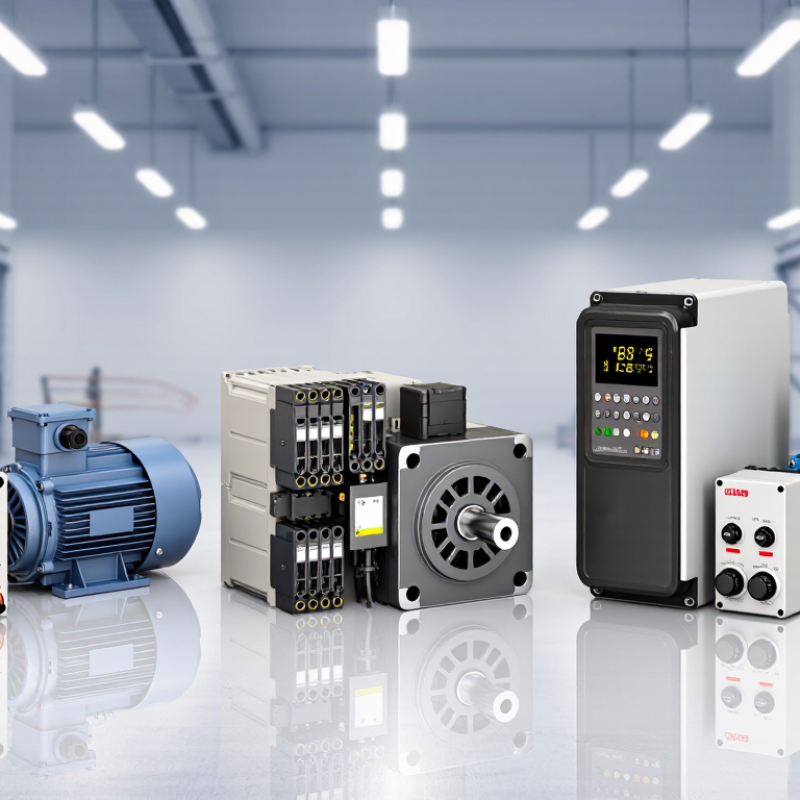
A three-phase starter controls how a motor connects to the supply and accelerates under load. The common choices are direct-on-line, star-delta, and soft starters. Each suits a different mix of supply capacity, load torque, and mechanical stress.
Direct-on-line starters apply full voltage immediately. They are simple, but starting current can be several times the motor’s rated current. Star-delta starters begin with reduced winding voltage, lowering starting current and torque. They suit motors designed for delta operation, but may struggle with heavy starting loads. Soft starters ramp voltage electronically, helping reduce abrupt belt pulls, pipe surges, and coupling shock. They do not provide continuous speed control.
The U.S. Department of Energy’s motor-systems sourcebook reports that motor-driven systems use about 68% of U.S. industrial electricity. That figure describes the broader system, not savings from starters alone. Still, careful starting and equipment matching matter. IEC 60947-4-1 covers electromechanical contactors and motor-starters. Check the motor nameplate, load torque, and allowable voltage drop before choosing. The neatest comparison chart may not capture a stubborn, high-inertia load.
This chart compares typical starting line current as a multiple of the motor’s rated current (FLA). Direct-on-line starters commonly draw 5–8× FLA; star-delta starters draw roughly one-third of direct-on-line starting current; and soft-starter current limits commonly fall around 2–4× FLA. Actual values depend on the motor, load, and settings. Star-delta starting torque is also roughly one-third of direct-on-line torque.
A direct-on-line (DOL) starter connects a three-phase motor directly to the supply at full line voltage. Its basic power circuit contains a contactor, an overload relay, and short-circuit protection. The control circuit typically uses a start button, a stop button, and an auxiliary contact that keeps the contactor energized after start-up. Simple hardware. The IEC 60947-4-1 standard covers contactors and motor starters, including requirements relevant to DOL assemblies.
When the operator presses Start, the contactor closes and current flows to all three motor phases. The motor accelerates under the available supply voltage; an overload relay trips if sustained current exceeds its setting. Starting current can be several times rated current, so engineers check supply capacity, protection coordination, and the driven load’s starting torque. A heavy, fully loaded conveyor is not the same as an unloaded fan. The U.S. Department of Energy’s Improving Motor and Drive System Performance sourcebook reports that motor-driven systems account for about 69% of electricity use in U.S. manufacturing. That scale makes correct selection consequential, even for a small starter. DOL is compact and economical, but it can cause voltage dips or mechanical shock. I would not choose it from motor rating alone; actual load and site conditions matter.
Star-Delta Starters: Starting Sequence and Applications
A star-delta starter reduces the current drawn when a three-phase motor begins turning. At startup, contactors connect the windings in a star configuration, lowering the voltage across each winding. This also reduces starting torque to roughly one-third of direct-on-line starting torque under ideal conditions. Once the motor approaches operating speed, a timer switches the windings to delta for normal running. Timing matters.
These starters are commonly used with pumps, fans, and other loads that do not need high breakaway torque. They may be unsuitable for loaded conveyors or machines that resist movement at startup. In open-transition designs, the brief changeover can cause a current spike or torque dip. Check the motor’s terminal markings and nameplate before selecting a starter; not every motor supports this connection.
Tips: Set the changeover timer using the motor’s acceleration under its actual load, not a guessed interval. Listen for hesitation and watch current during commissioning. Small details matter. If the motor has not gained enough speed, switching too early can produce a harsh transition. Recheck settings after changes to the driven equipment.
A soft starter brings a three-phase motor up to speed by raising its terminal voltage over a set ramp. This reduces starting current and abrupt torque that can jolt belts, couplings, pumps, and conveyor loads. Less shock. Unlike a variable-frequency drive, a conventional soft starter generally does not regulate motor speed after startup. It is designed for controlled starting and stopping. Settings must match the motor and load. A ramp that is too long can create heat instead of protection.
Motor reliability matters where downtime interrupts production. A 2014 U.S. Department of Energy sourcebook reports that motor-driven systems use about 69% of U.S. manufacturing electricity. The report, Improving Motor and Drive System Performance, does not claim soft starters deliver that figure in savings. It highlights why motor-system choices deserve careful attention. Engineers typically check starts per hour, load inertia, supply limits, and thermal capacity, then verify protection coordination. A soft starter may include overload functions, but short-circuit protection still requires suitable upstream devices. Measure current during commissioning. Simple on paper. Not always simple in a hot, dusty plant.
| Starter Type | Starting Method | Typical Starting Current | Acceleration Profile | Motor and System Protection | Main Advantages | Key Limitations | Common Applications |
|---|---|---|---|---|---|---|---|
| Direct-on-Line (DOL) Starter | Connects the three-phase motor directly to the full supply voltage through a contactor. | Typically about 5–8 times the motor's full-load current, depending on motor design and load. | Very rapid acceleration with high starting torque. | Usually includes short-circuit protection, overload protection, and phase-loss protection when correctly configured. | Simple design, low initial cost, easy maintenance, and high starting torque. | High inrush current can cause voltage dips and mechanical shock. It may not be suitable for large motors or weak power systems. | Small pumps, fans, compressors, conveyors, and machines that can tolerate abrupt starting. |
| Star-Delta (Wye-Delta) Starter | Starts the motor in a star connection at reduced voltage, then changes to a delta connection for normal operation. | Approximately one-third of the DOL starting current under comparable conditions. | Reduced-voltage starting followed by a stepped transition to full-voltage operation. | Can include overload, short-circuit, phase-loss, and transition-monitoring protection, depending on the control design. | Reduces line current and starting stress compared with DOL starting; relatively economical for suitable motors. | Requires a compatible six-terminal motor and careful transition settings. Starting torque is also reduced to about one-third of DOL torque, so it is unsuitable for high-breakaway loads. | Fans, centrifugal pumps, and lightly loaded conveyors with gradual load pickup. |
| Soft Starter | Uses controlled semiconductor devices to gradually increase the voltage applied to the motor during startup. | Commonly adjustable and often set around 2–4 times full-load current, depending on the load and acceleration requirements. | Smooth, adjustable ramp-up and, on many units, controlled ramp-down or soft stopping. | May provide electronic overload, current limiting, phase-loss, stall, undercurrent, overtemperature, and voltage monitoring functions. | Reduces mechanical shock, limits inrush current, minimizes water hammer in pump systems, and supports smoother motor protection and control. | Costs more than basic DOL or star-delta equipment. It does not normally provide continuous speed control after startup, and it generates heat that requires suitable installation and ventilation. | Large pumps, conveyors, compressors, crushers, mixers, and systems requiring controlled acceleration or reduced mechanical stress. |
What Are the Top 3 Phase Motor Starter Types?
Comparing the Three Starter Types by Performance and Use Case
Three-phase motors usually start with direct-on-line, star-delta, or soft starters. Direct-on-line starters are simple, compact, and inexpensive. They apply full voltage immediately, producing strong starting torque. However, inrush current may reach six to eight times the motor’s rated current. This can cause voltage dips and mechanical shock. They suit small pumps, fans, and machines with sturdy couplings. The IEC 60947-4-1 standard remains a key reference for starter protection and switching performance.
Star-delta starters reduce starting current to roughly one-third of direct-on-line starting. Their starting torque also falls to about one-third. This makes them useful for lightly loaded compressors, fans, and long conveyor systems. Soft starters provide a smoother voltage ramp. They reduce belt slip, pipe hammer, and stress on gearboxes. The U.S. Department of Energy reports that motor-driven equipment can represent more than 70% of industrial electricity use. Small improvements in starting and operating behavior can therefore matter. Yet soft starters do not automatically improve every motor’s running efficiency. That assumption needs checking.
Tips: Match the starter to load torque, acceleration time, and supply capacity. Record current during startup. A calm waveform often reveals problems before a noisy gearbox does. Site conditions may challenge textbook choices.